The workshop “From Nano to Art: Physics as Experimental Material”
What happens when physics meets creativity?
In this workshop, students explored physical phenomena and transformed them into their own artistic practice. The laboratories of the MAIN Research Centre in Chemnitz served both as inspiration and as source material, which the participants translated into a variety of artistic forms.
Working in interdisciplinary teams, the students developed experiments with analogue and digital media, video, sound, performance and installation. Under the guidance of artistic mentor Sanja Star, they translated scientific concepts into original forms of artistic expression and combined different perspectives and approaches to reveal unexpected connections between art and science.
Presentation of the artworks
Photographs by Fabian Thüroff.
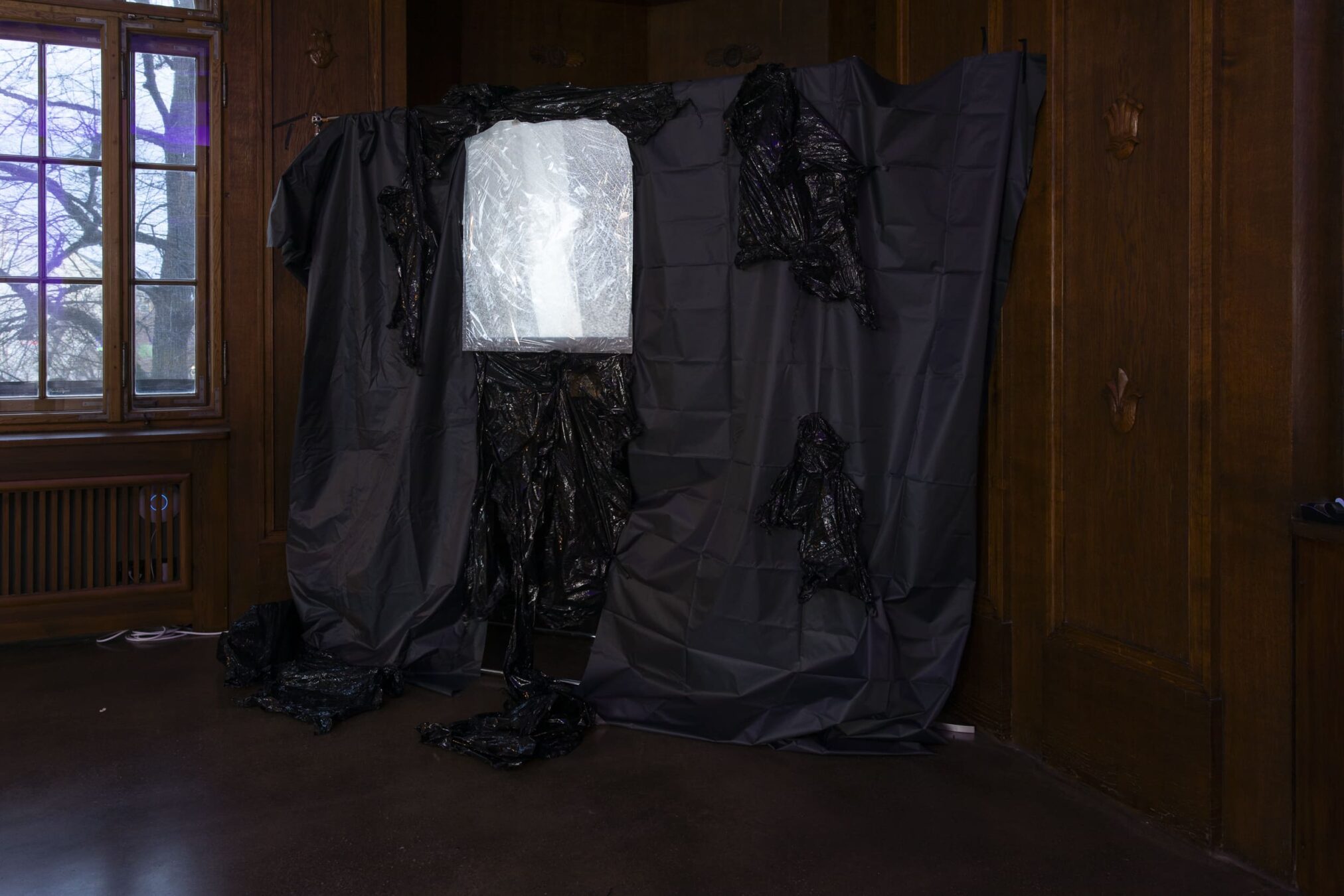
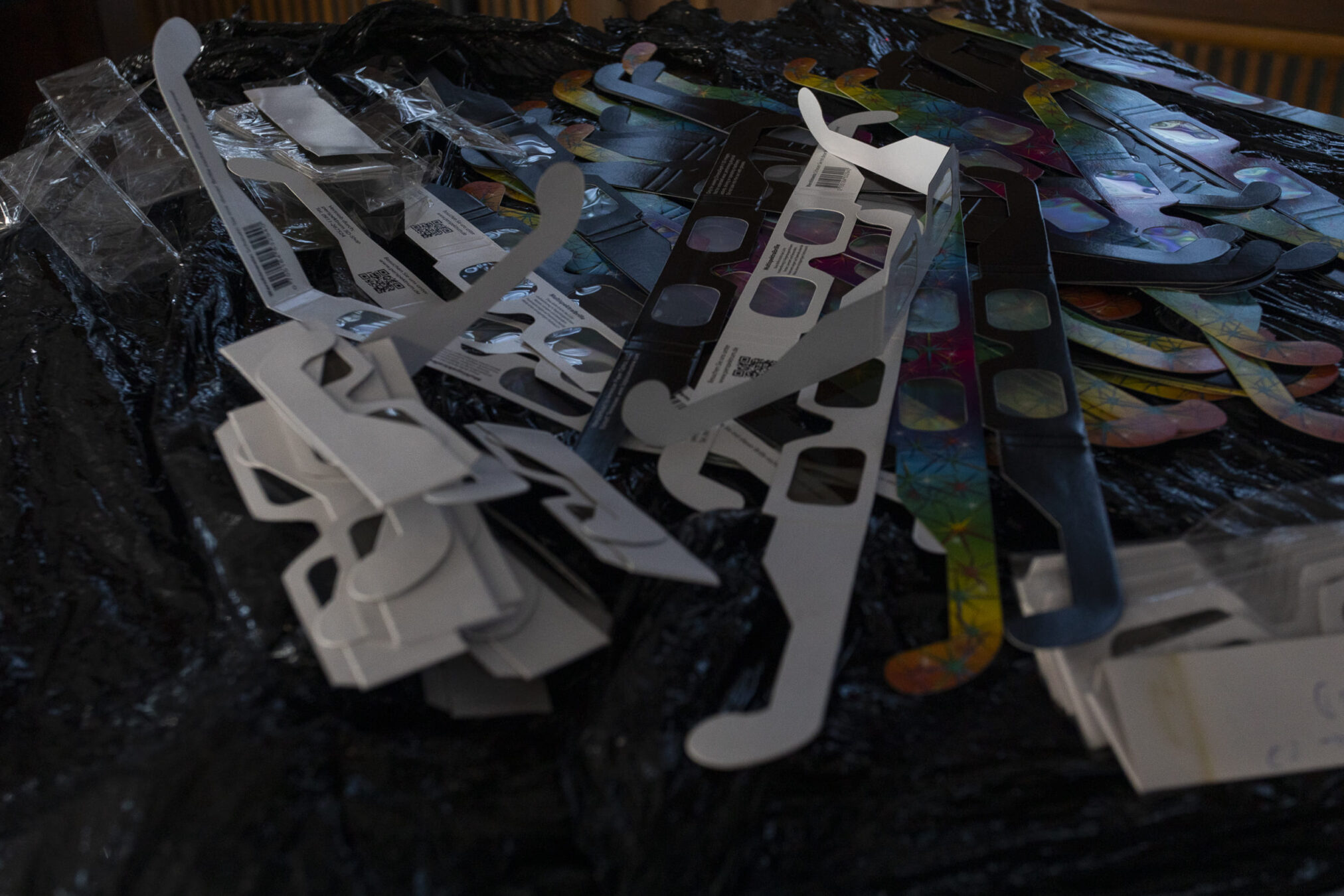
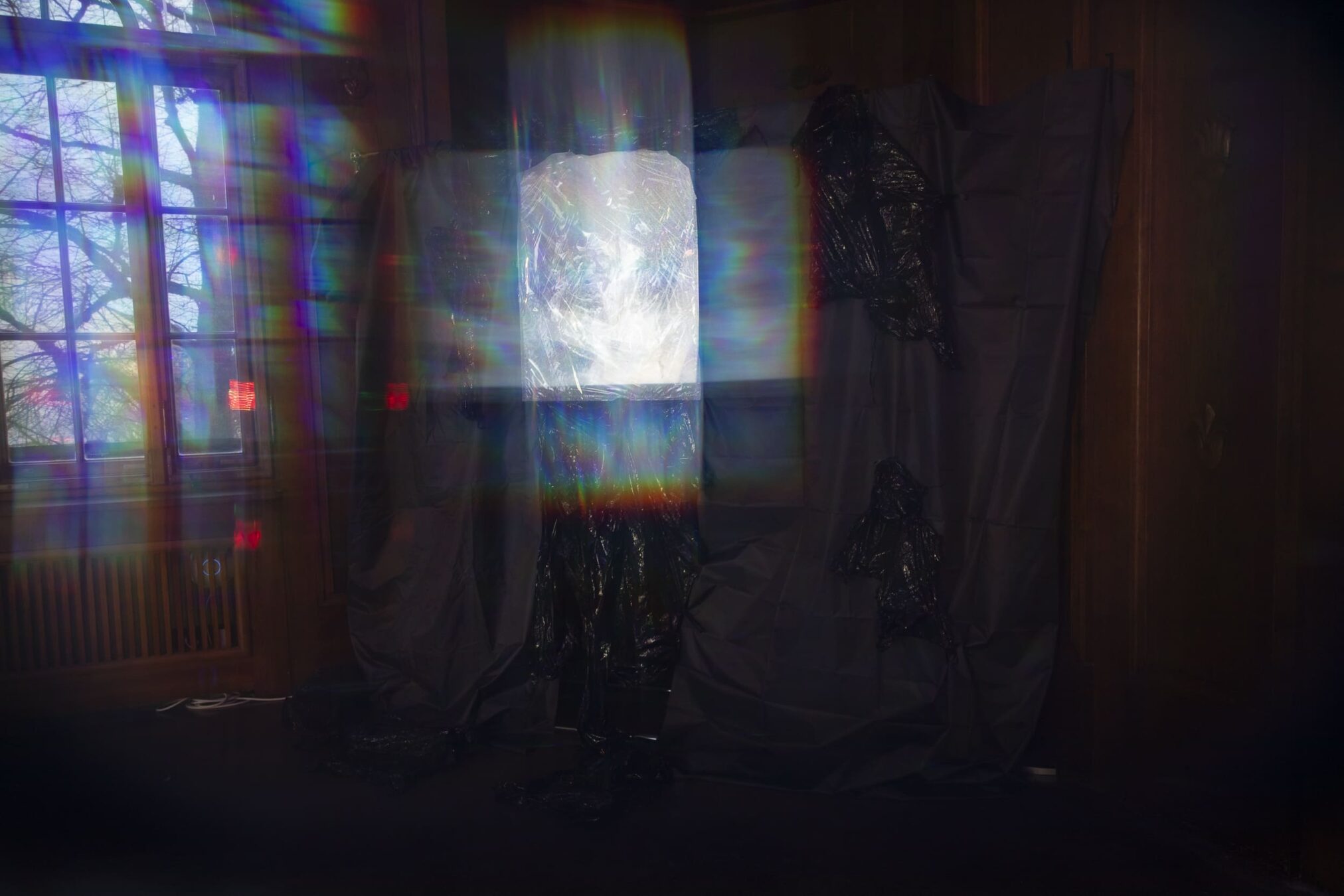
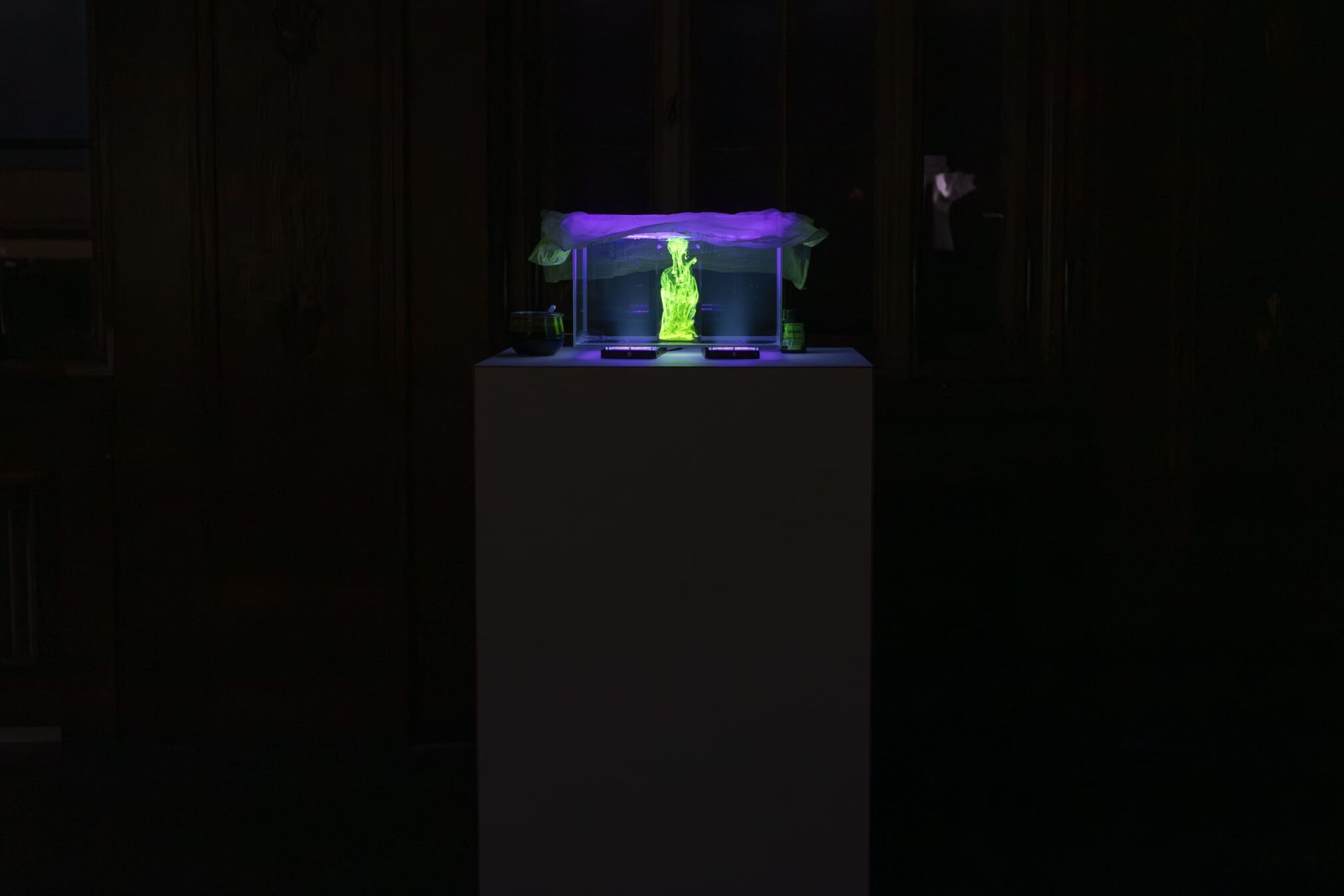
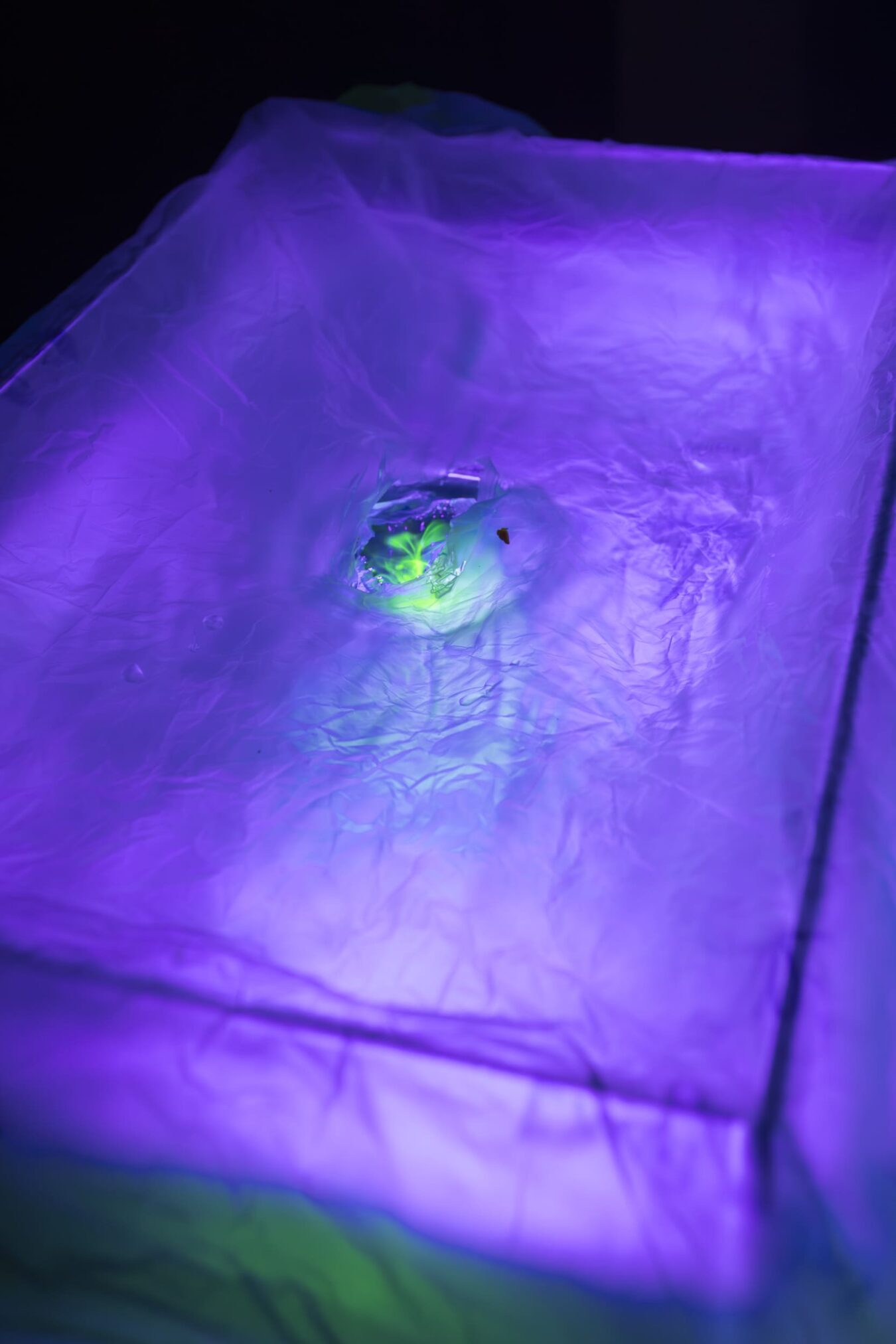
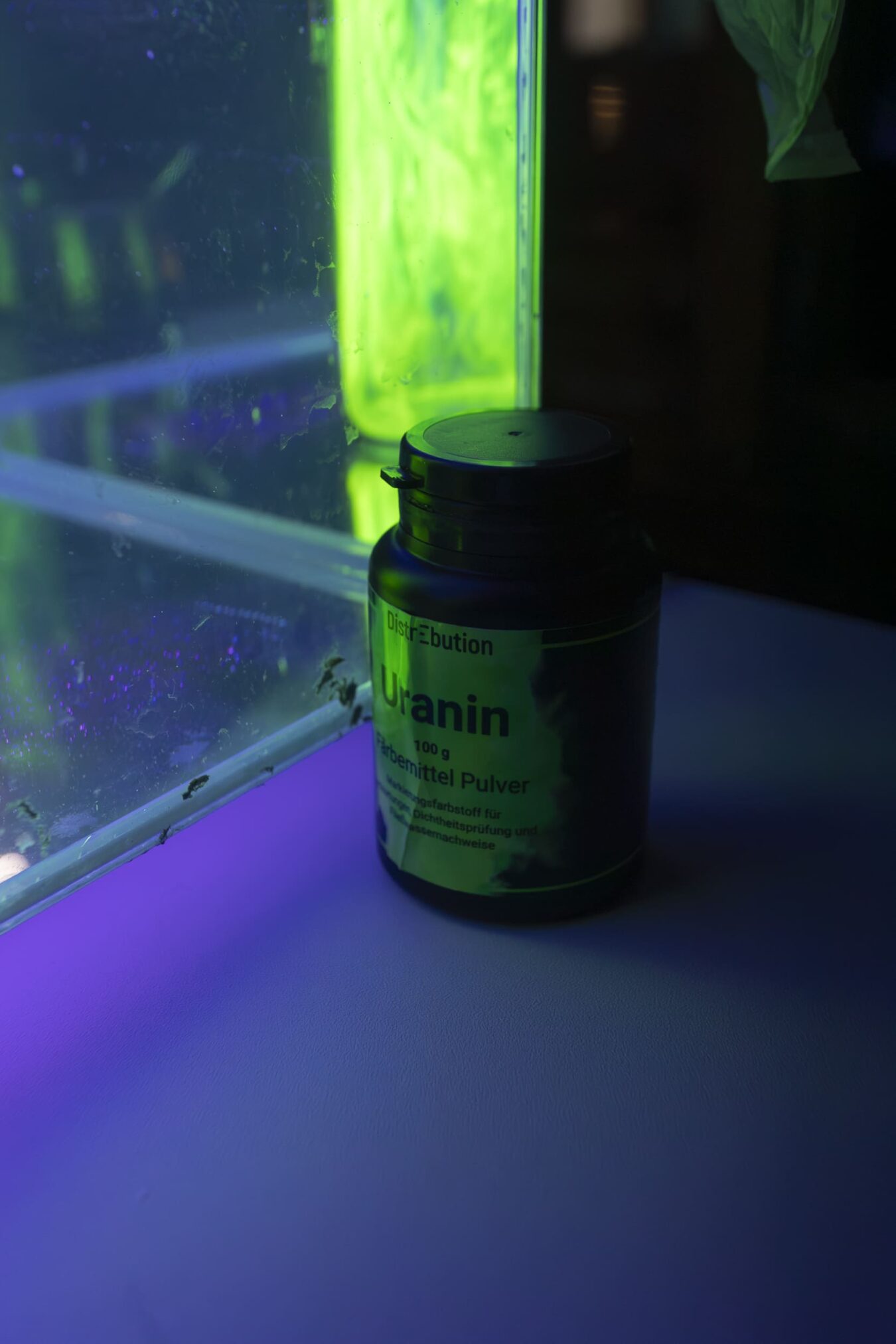
Untitled – Christopher Schröder
I am a painter. Colour is my starting point and my tool for exploring perception. I am interested in how painting changes when light, movement or time come into play. My works often deal with transitions – those moments when something tips over, opens up or reassembles itself.
The light images are an extension of this search. They arise from the same questions as my painting – only with different means. Light becomes colour, movement becomes brushstrokes. In the end, it always comes down to the same core: the moment when something becomes visible – and then disappears again.

Layers of Connection – Vanessa Rucks
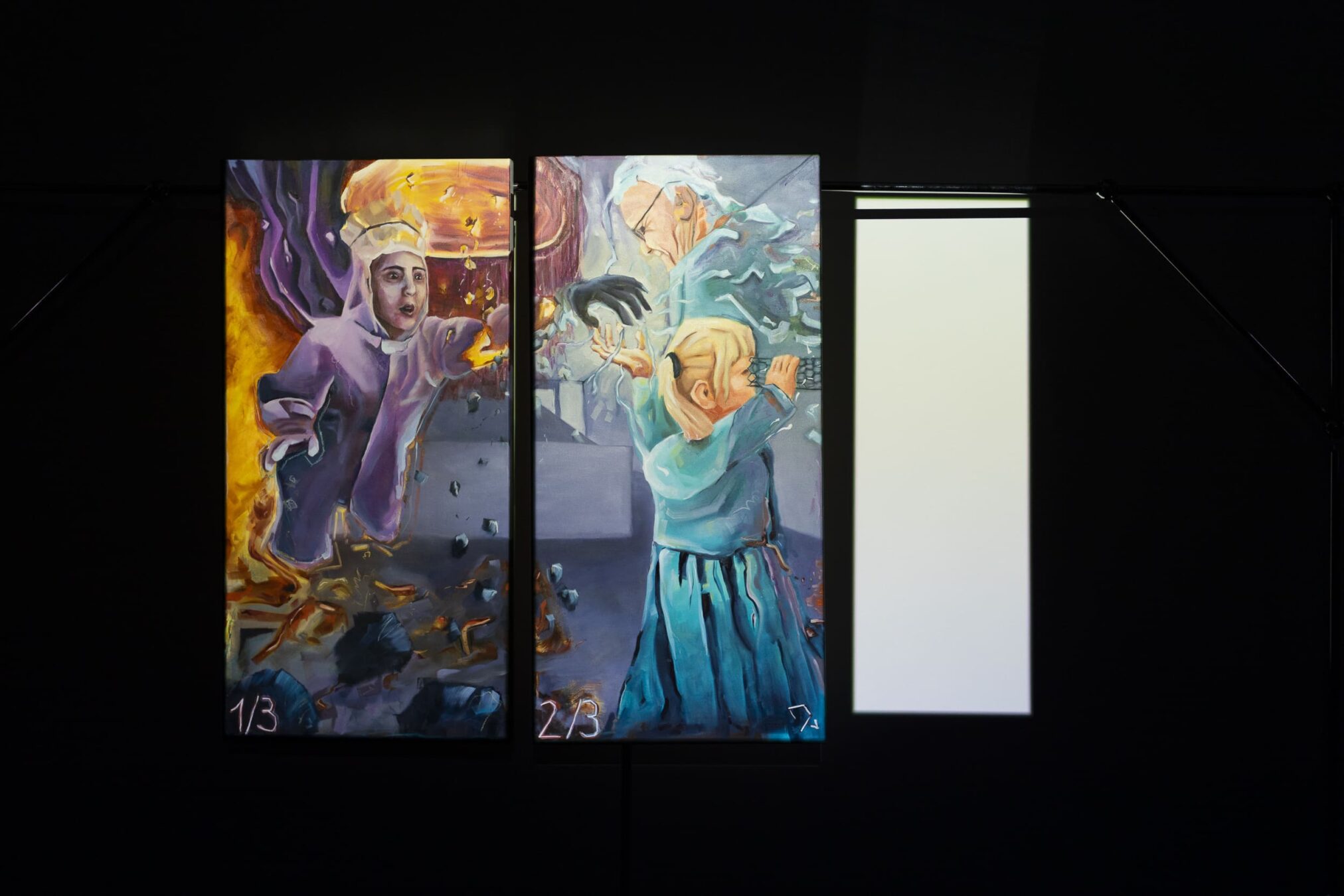
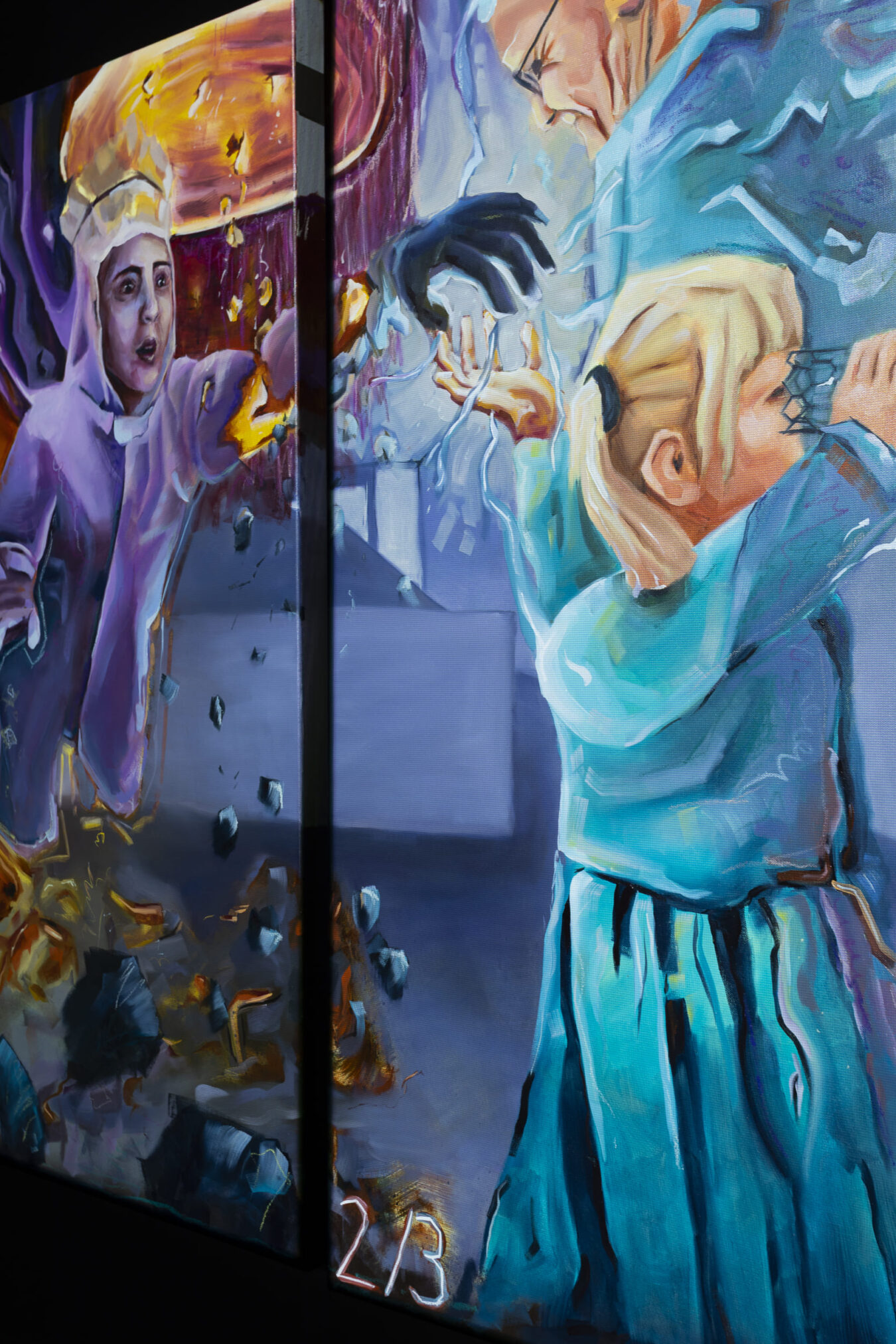
The triptych Layers of Connection explores the subtle connections between art, science and humanity.
A human figure emerges from ultraviolet light – like microscopic structures on a wafer, it forms from pure energy. Golden light descends like glowing dust, carried by charged particles.
Her hand – grown layer by layer through galvanisation – escapes the laboratory environment and almost touches the hand of an old man. Their encounter is reminiscent of the interaction between anode and cathode inside a microbattery prototype.
Nearby, a child looks ahead – curious, hopeful, open to what may yet come.
adesse (capacitive interconnection) – Lino Angermann
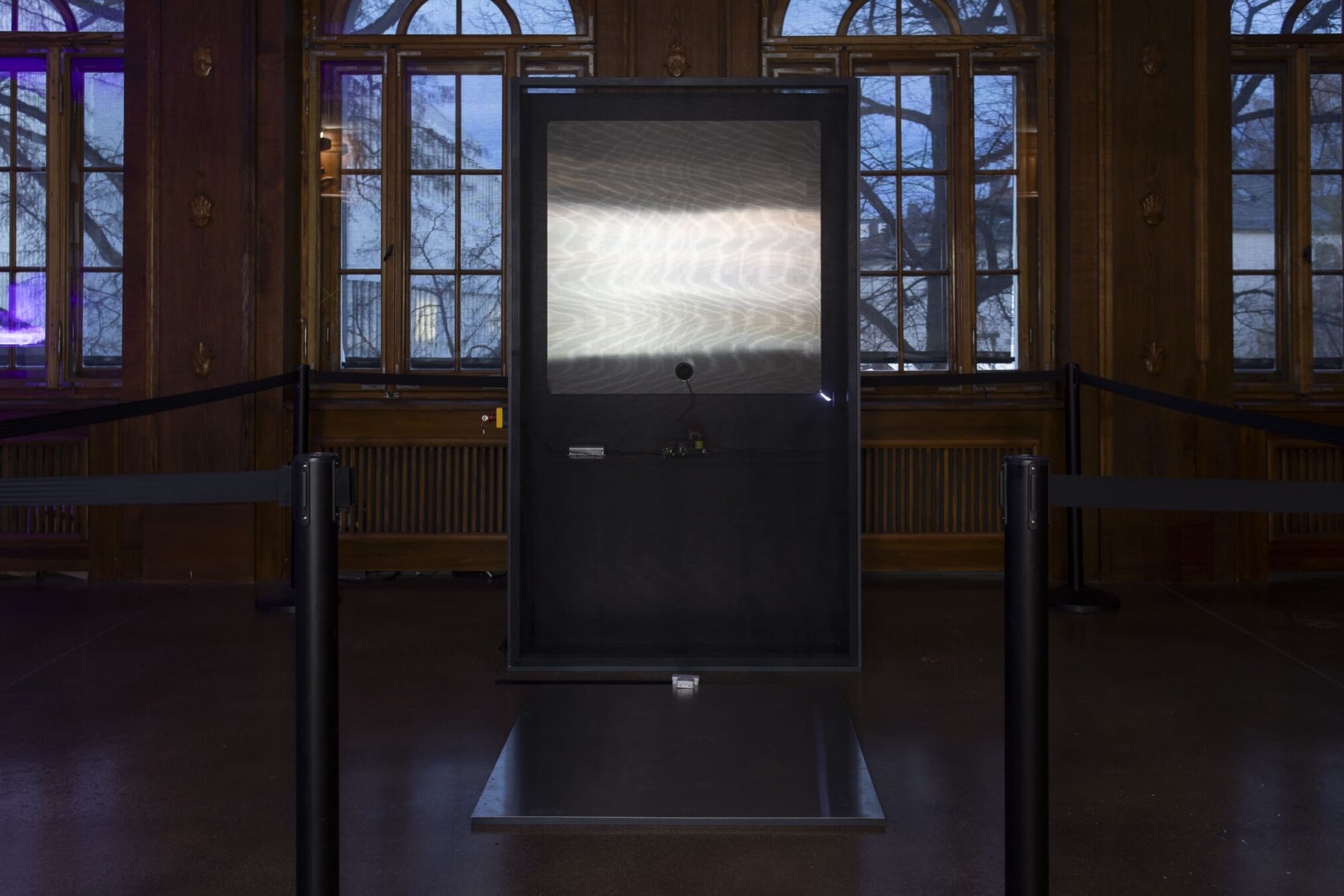
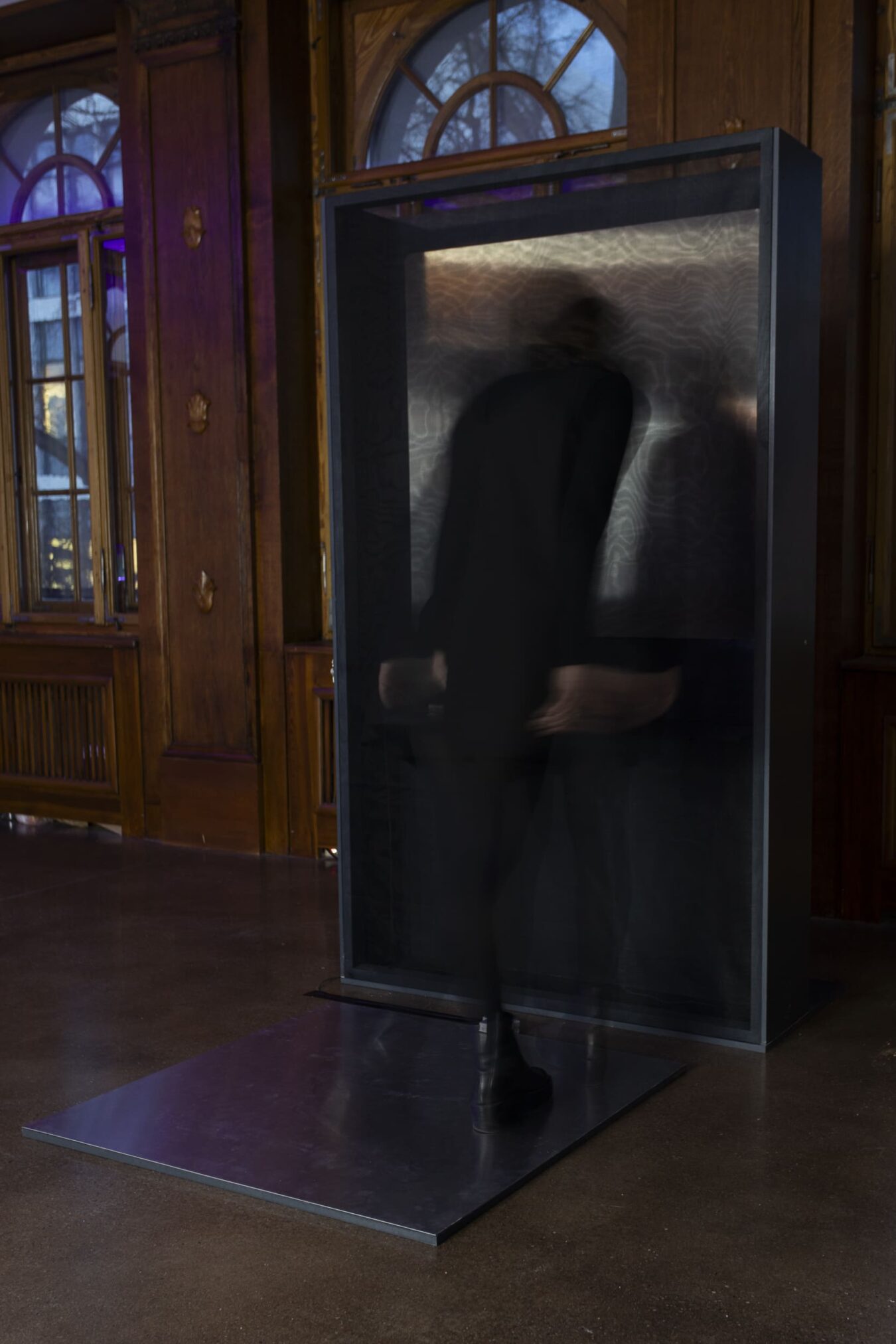
Electrostatic field, 50kV high-voltage generator, transformer, aluminium plates, MDF, fibreglassfabric
Lino Angermann’s artistic practice consists of intervening in existing spaces, altering their structures and creating situations in which physical and psychological spaces of experience arise.
The work Adesse stages a confrontation between the viewer and an electrostatic sub-space. The viewer stands on an aluminium plate opposite a plate that pulsates with 50,000 volts of voltage. They become part of an invisible field. The field creates a presence that permeates the space and, subtly, the human body.

science is a remix (demo) – Walter Grunt
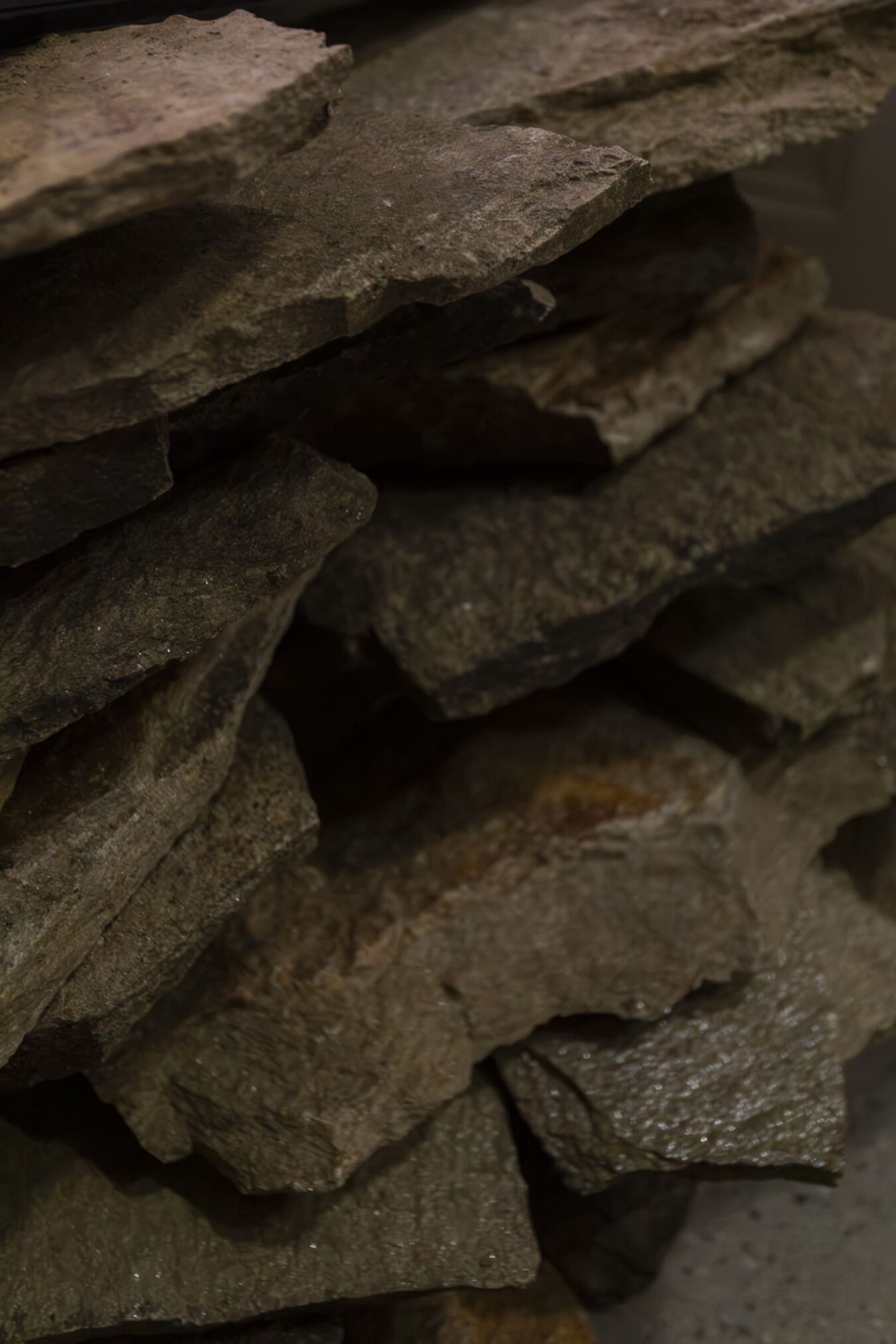
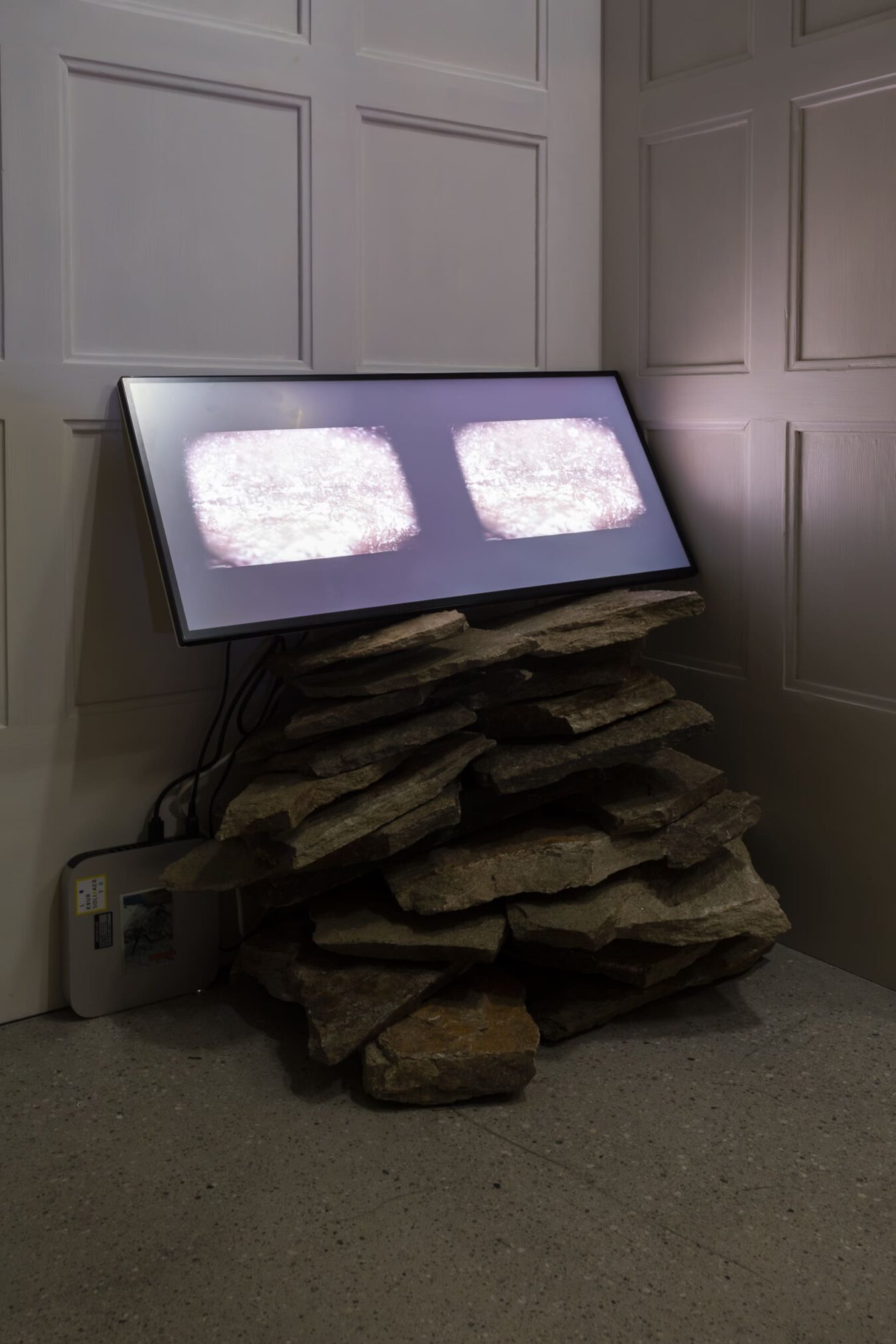
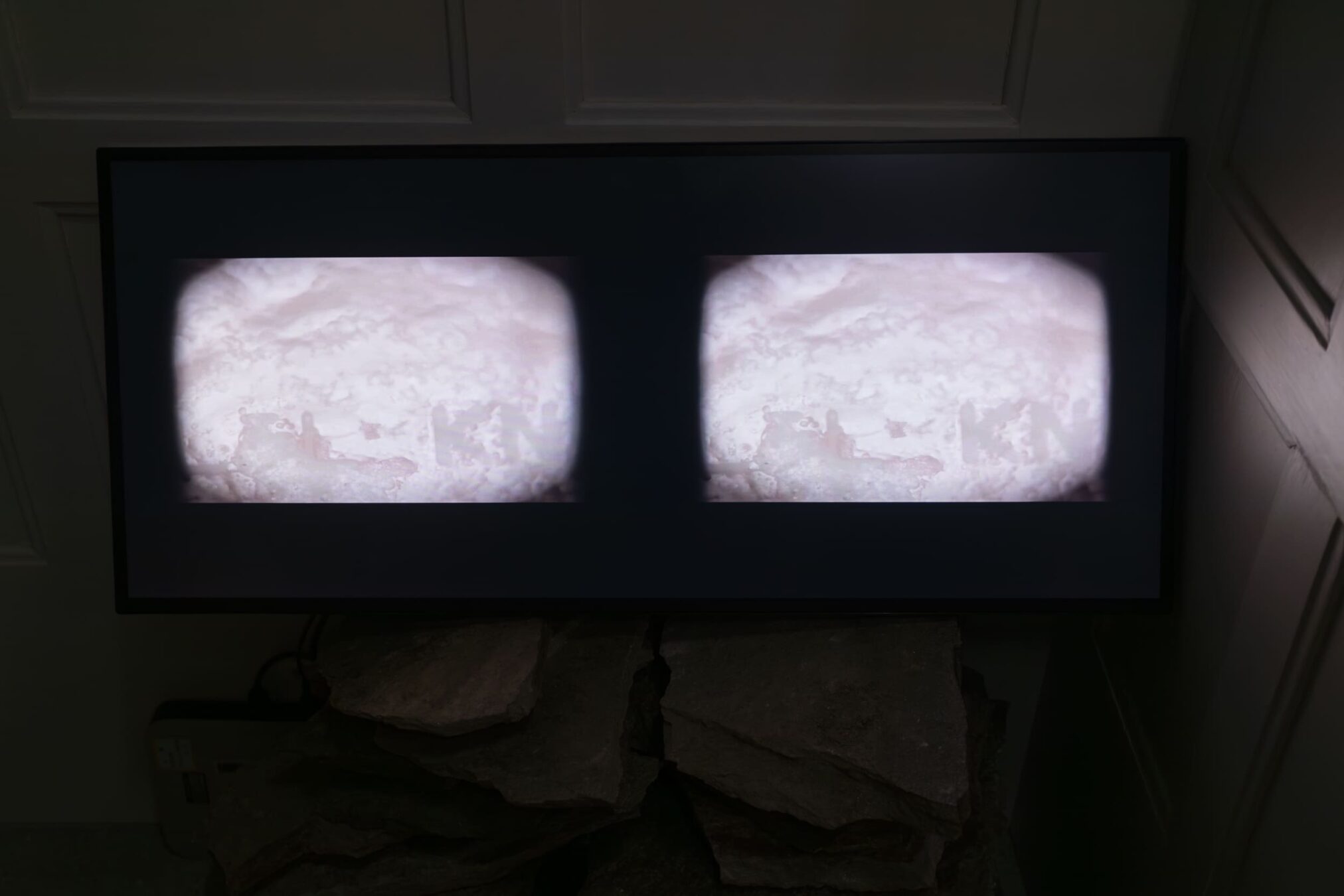
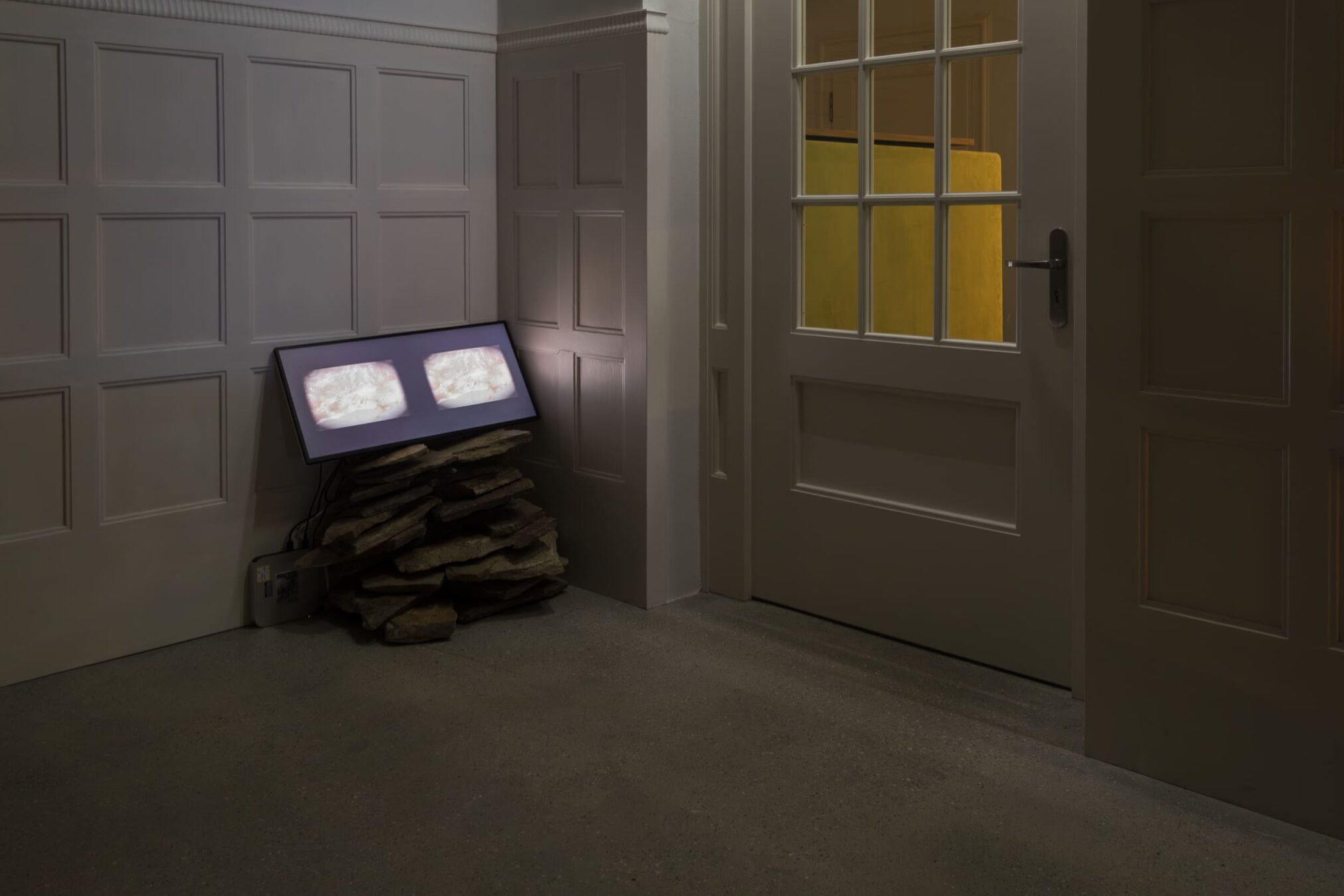
A sentence from Jenny Holzer’s Truisms (1978) was lithographed on Solnhofen limestone on a micrometre scale. Photolithography, a key technology in microchip production, can be traced back to the German artist Alois Senefelder, who experimented with the same stone almost 200 years ago. To make the engraving visible, images were taken with an electron microscope.
The work reflects historical continuities in technological innovation. It is both a tribute to our creative ancestors and the result of a collaboration between scientists and artists who are exploring new fields together. “A little knowledge can go a long way” – a powerful reminder of how fruitful it is to build on ideas from other disciplines to create something new.
This work is a love letter to the remix culture that has shaped the artist.
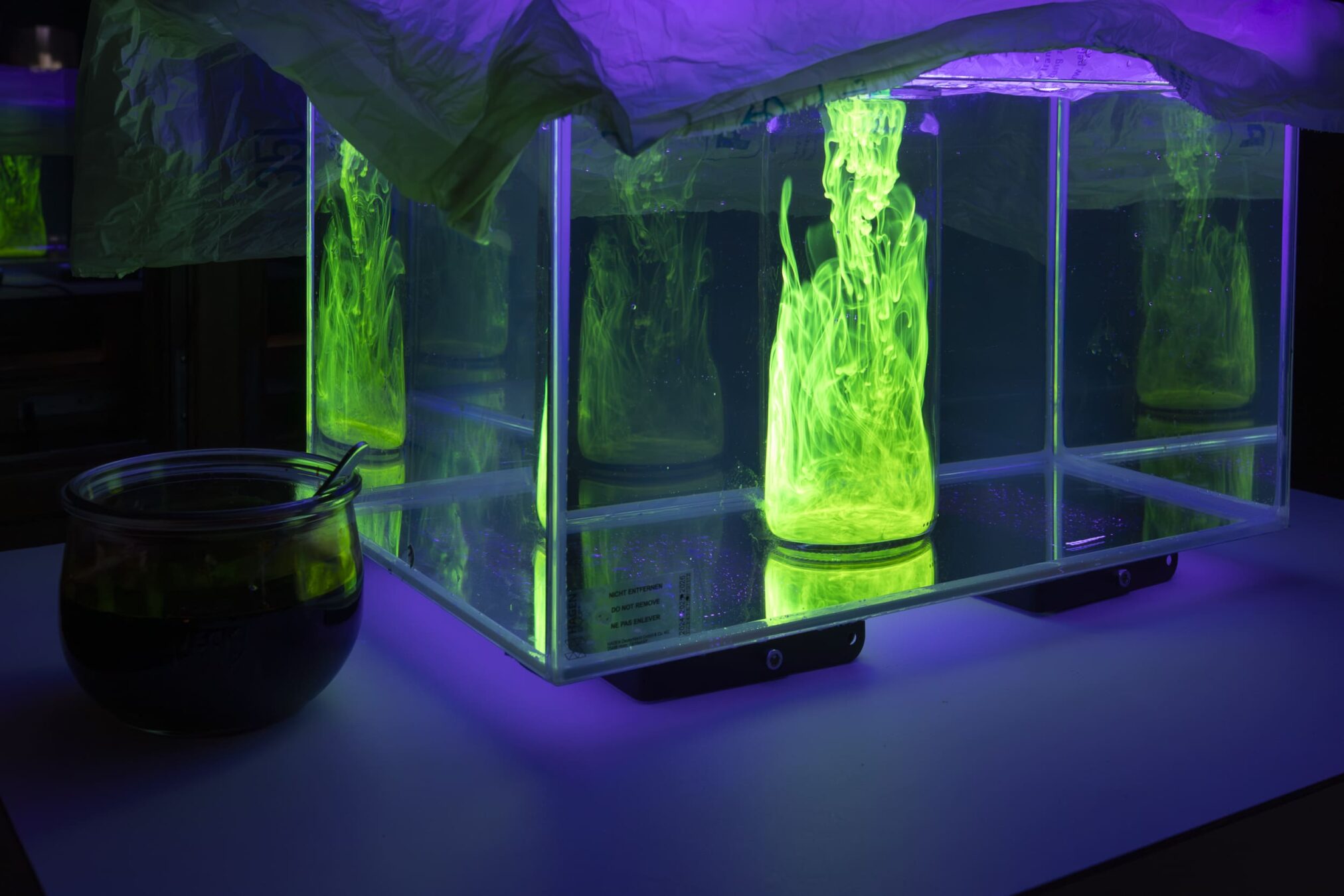
Untitled – Tim Abels
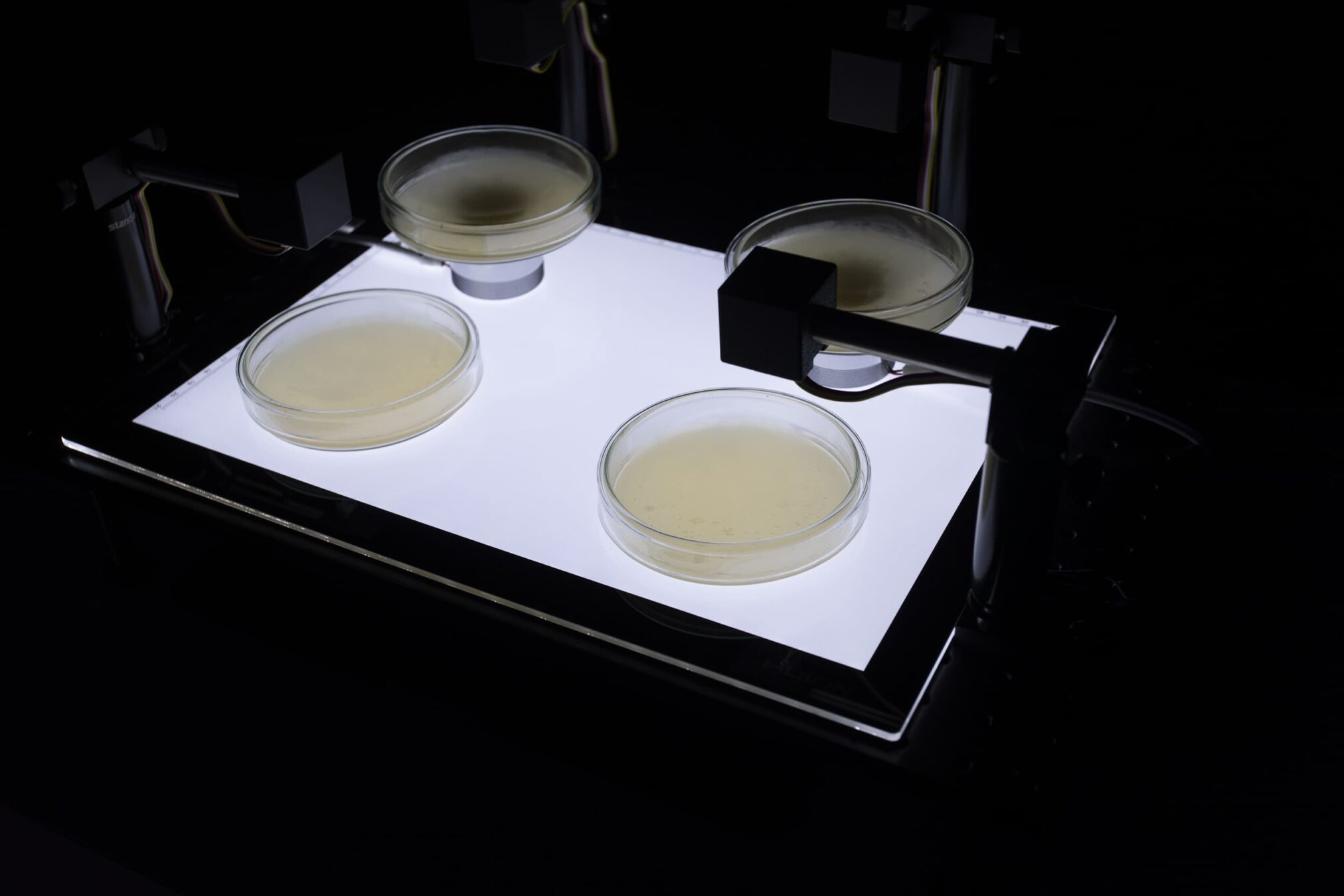
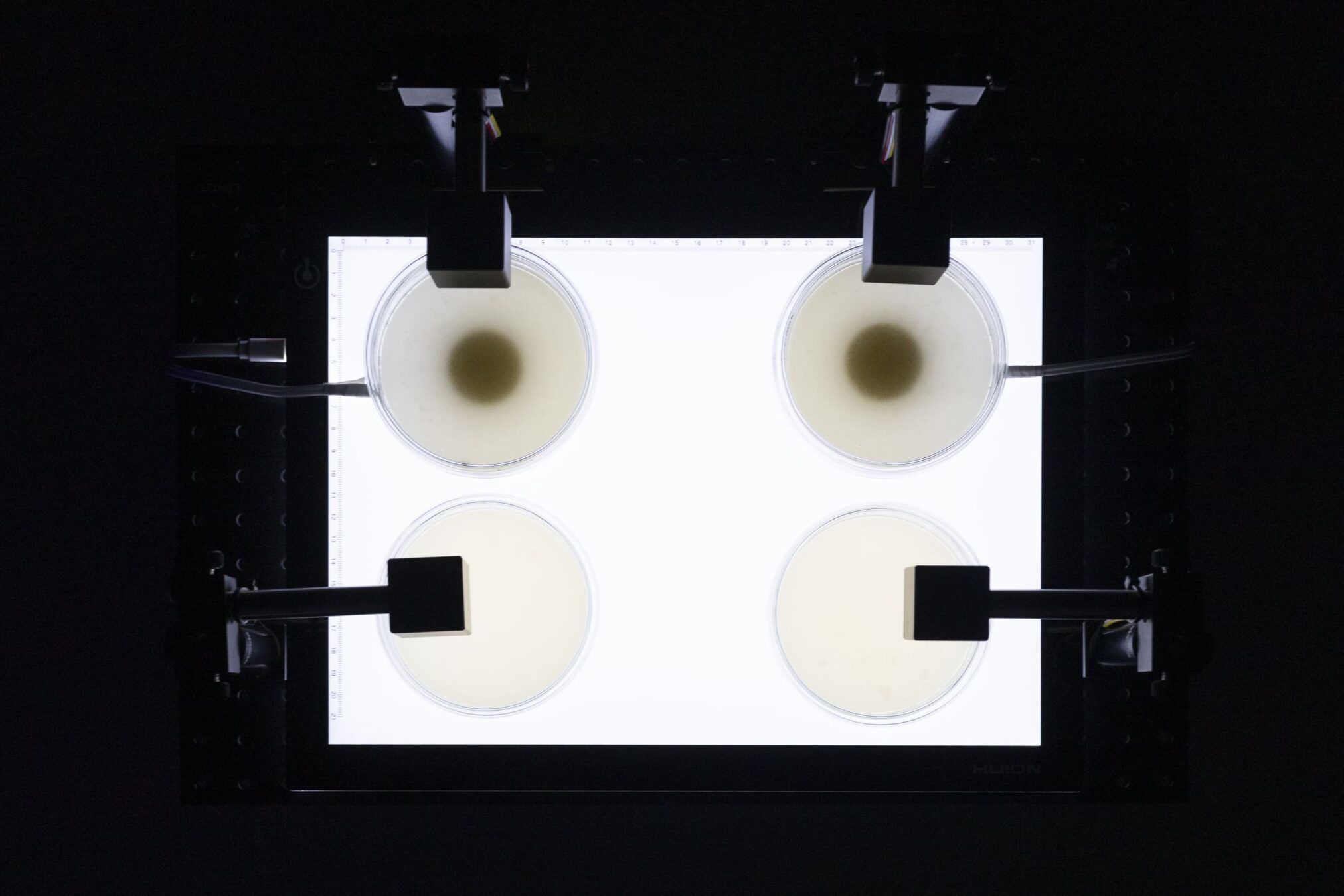
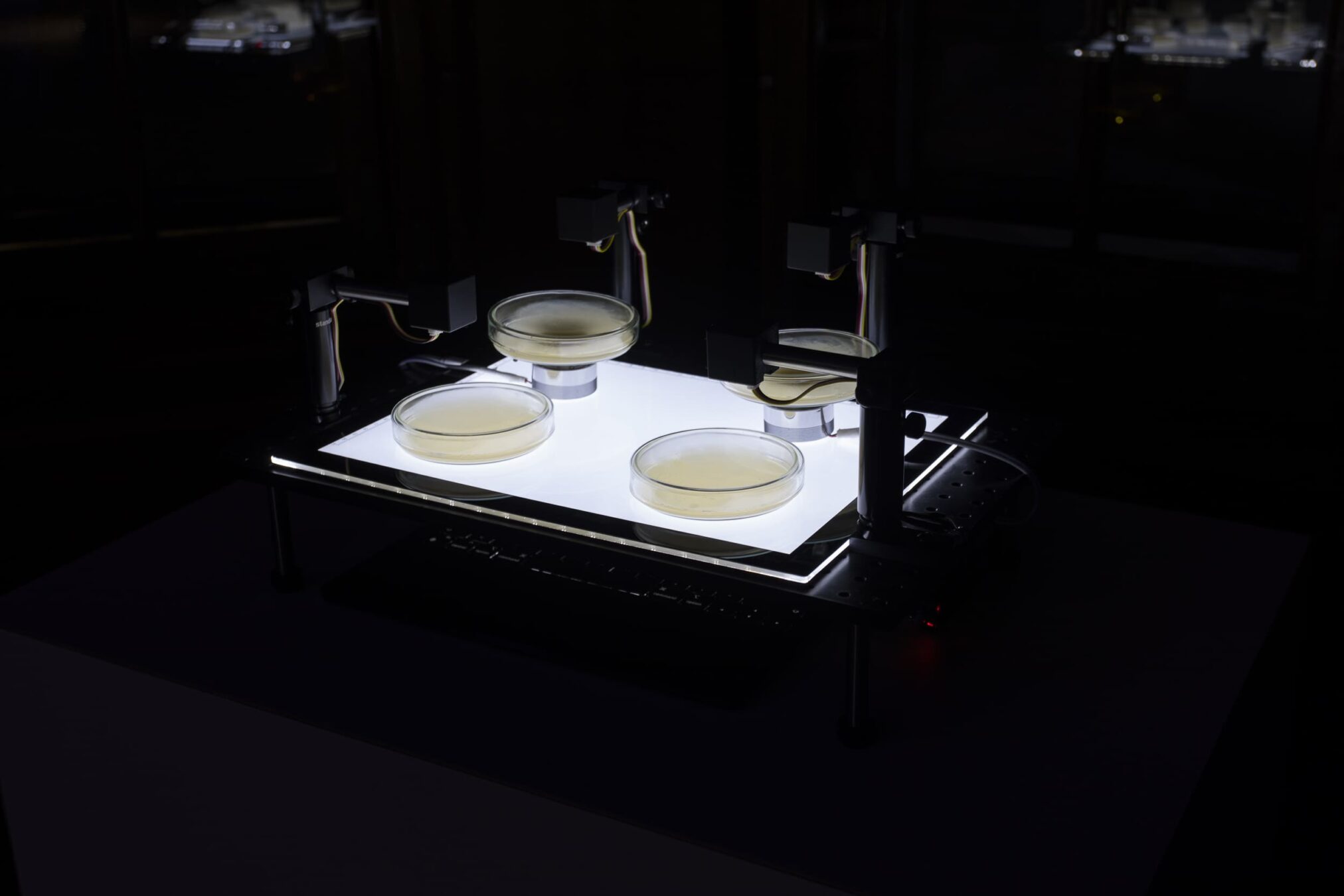
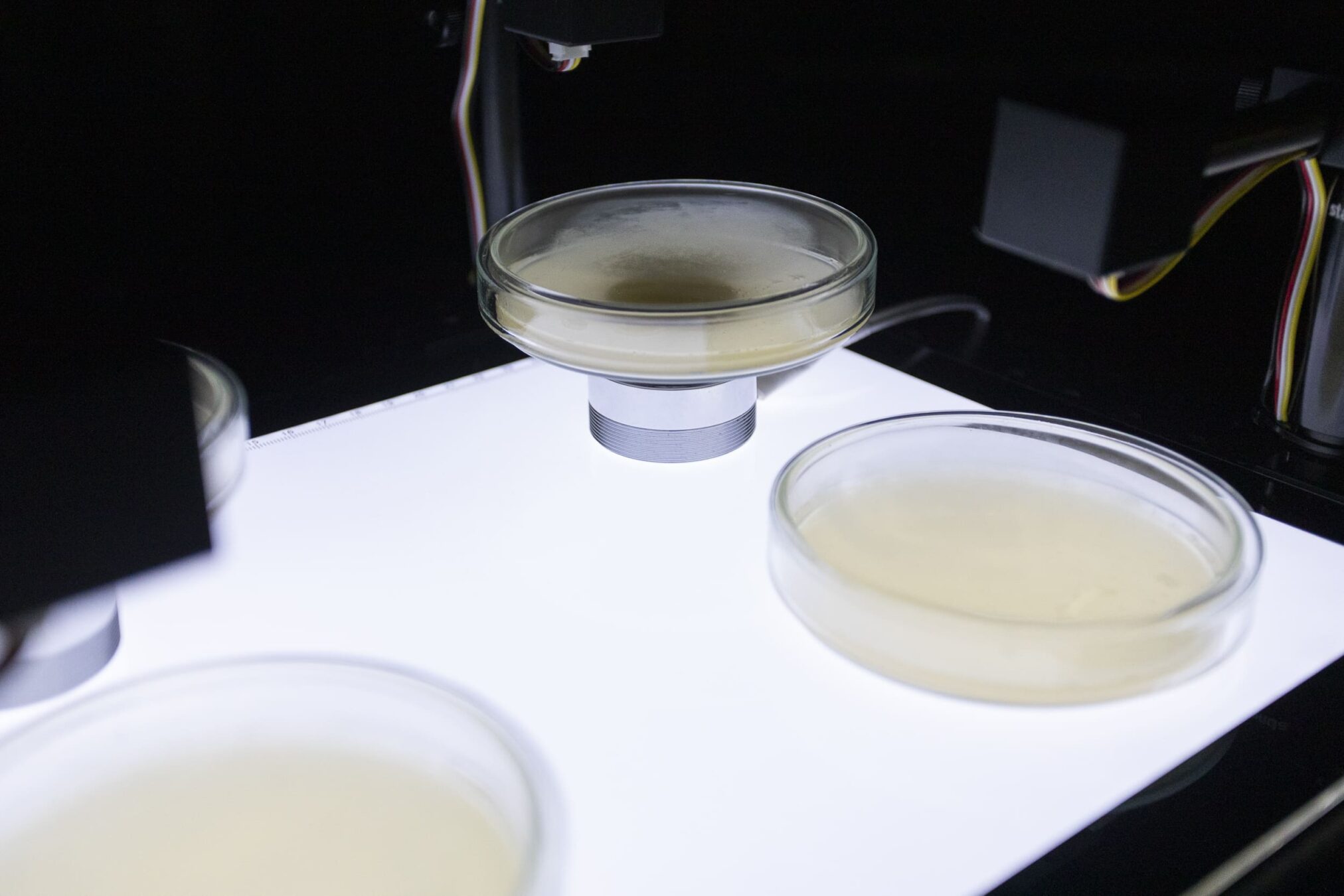
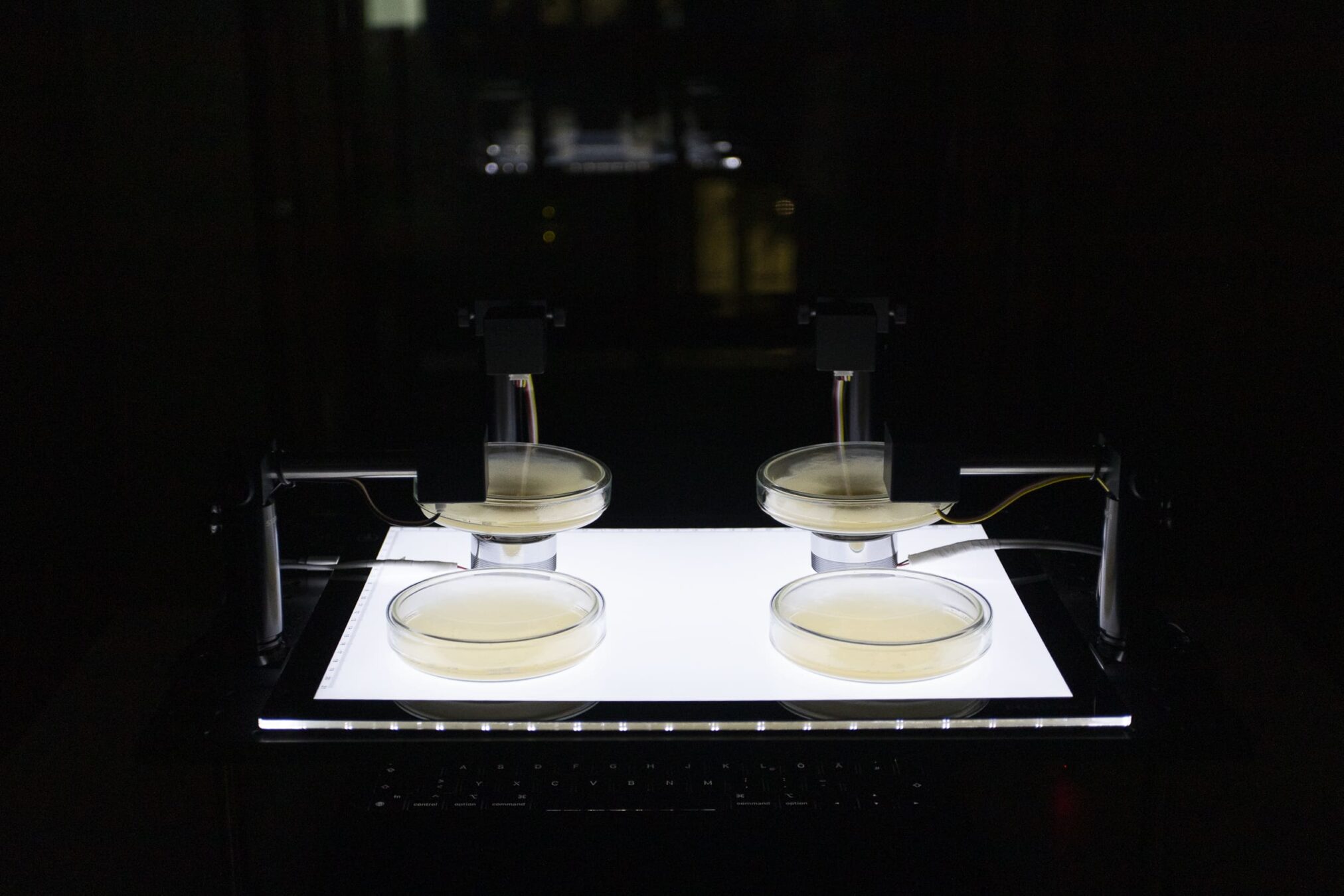
The turbidity of four yeast cultures is continuously monitored by sensors. Two of the cultures are exposed to sound frequencies that are modulated in real time by the measured parameters of all four cell cultures.

…0.0000000001… – Youshin Gim
Piano performance with small electronics
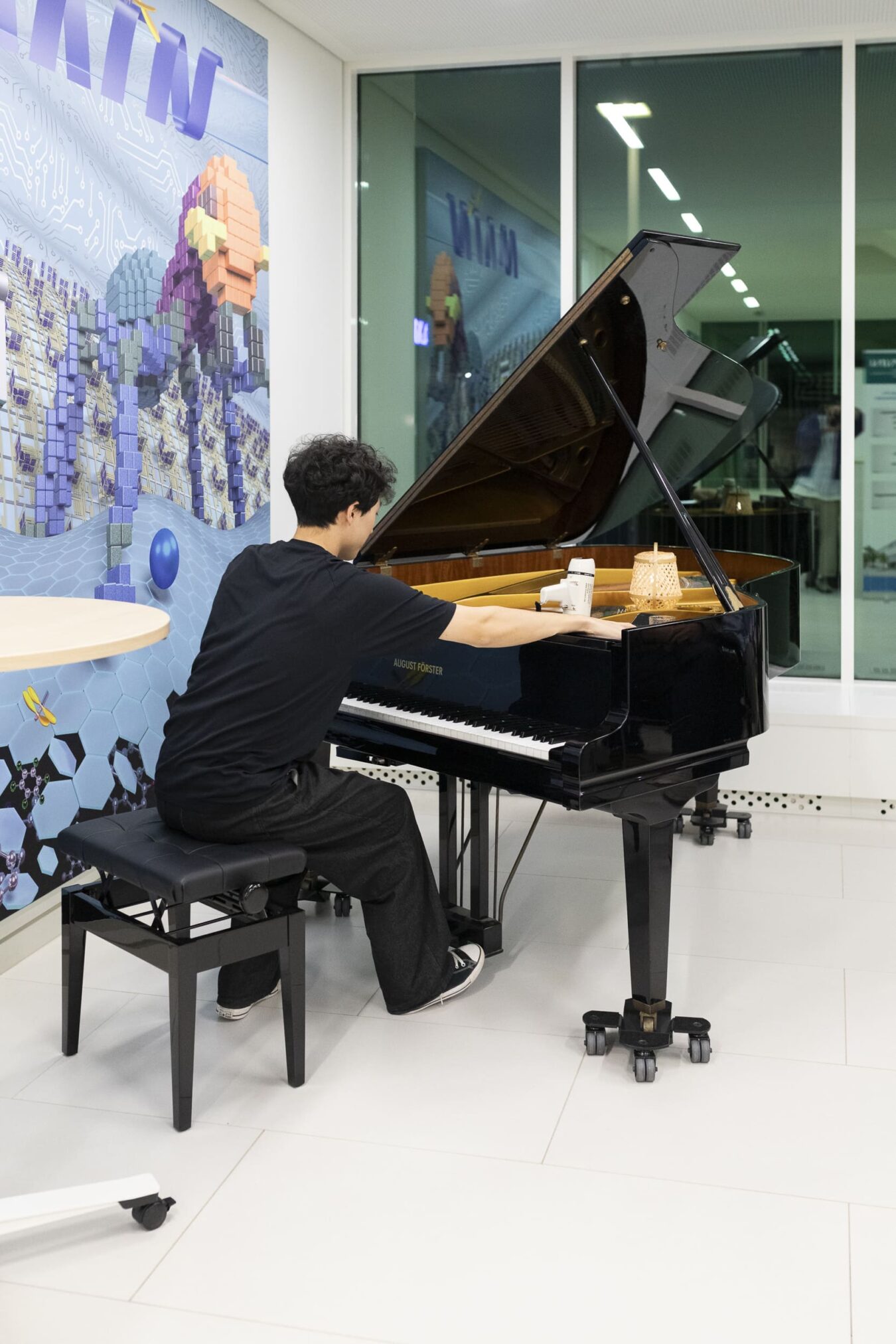
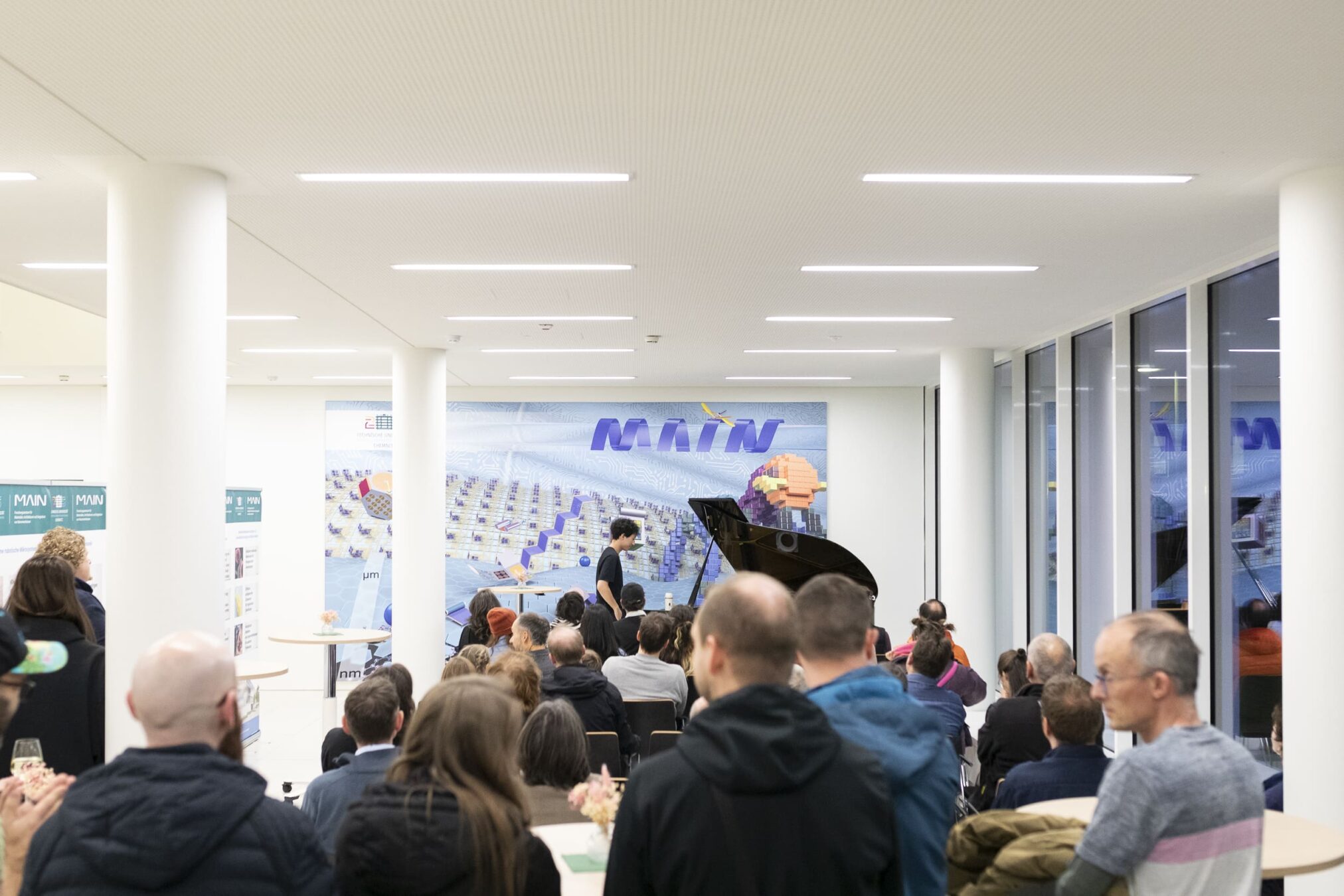
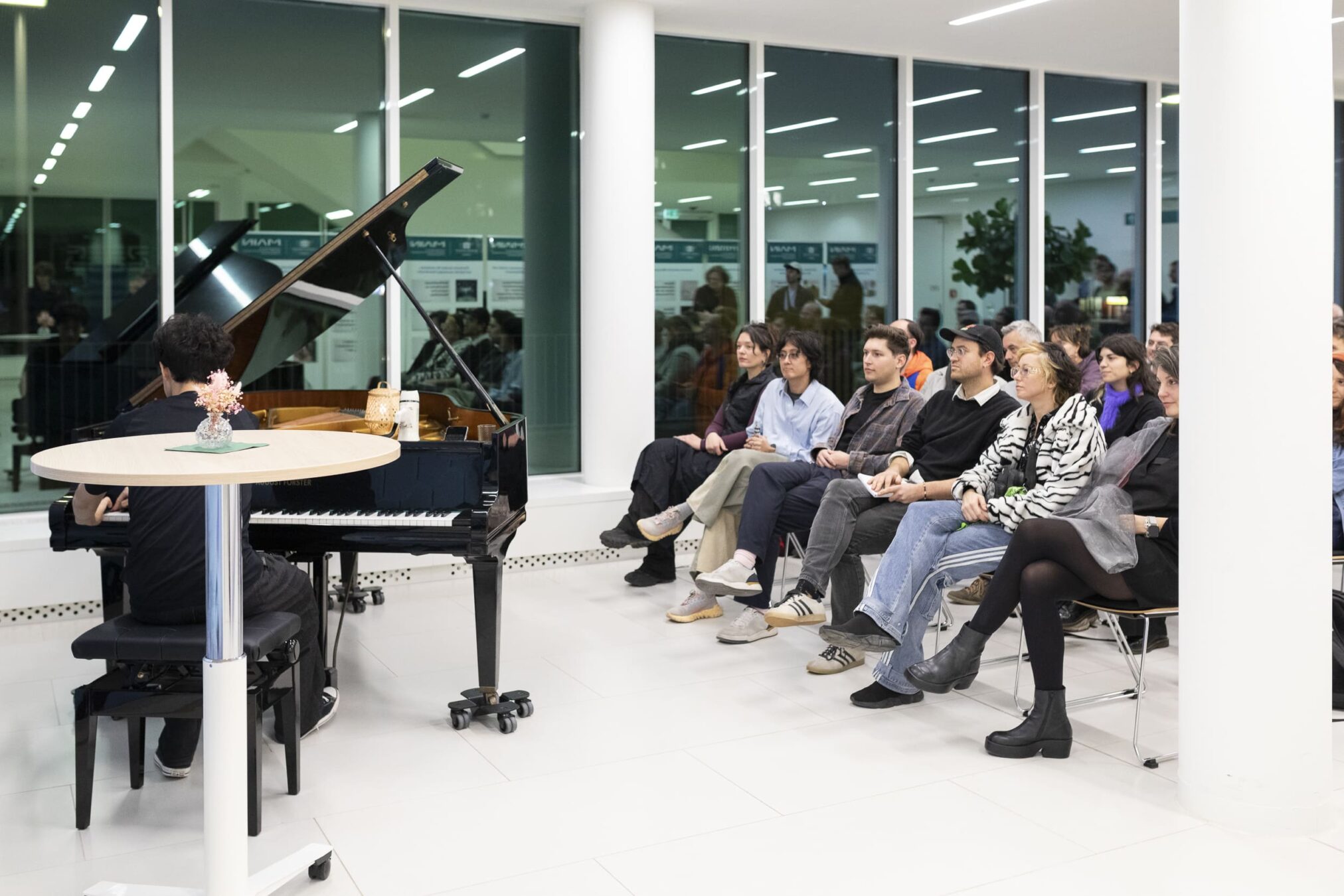
This project began with the theme of “nano”. These tiny particles are often barely visible – even under a microscope. The work translates microscopic movements into sound – a transformation from the visible to the audible.
The resulting sounds are not well-formed or harmonious compositions as in pop or classical music. Instead, they are reminiscent of natural sounds and the aesthetics of Musique Concrète: sounds from unconventional materials such as noise and environmental resonances. By making the hidden sounds of the background perceptible, the work unfolds different layers and timbres produced by two instruments – laptop and fortepiano – and invites listeners to immerse themselves in the grain of the sound.
Folding Field – Sanja Star
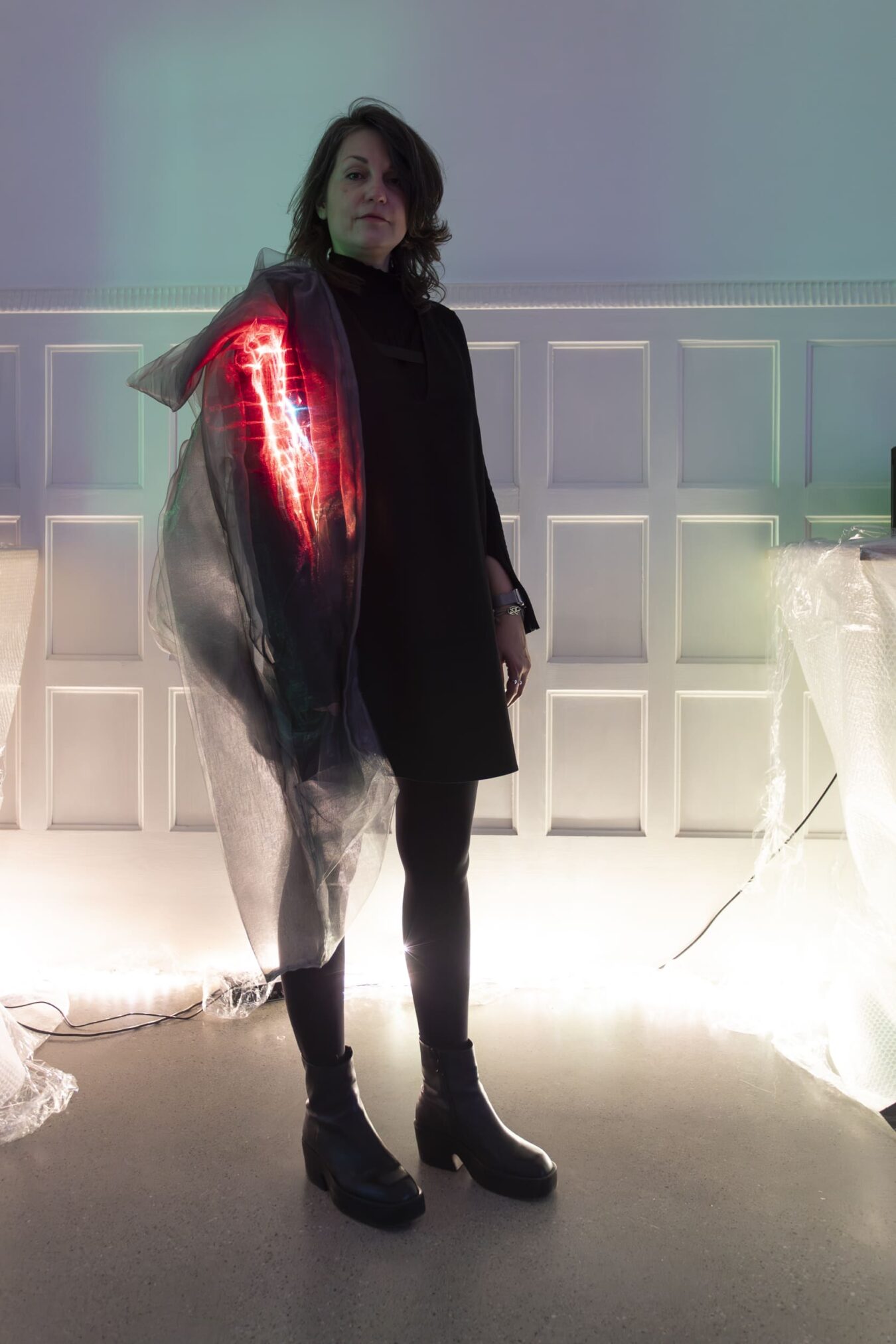
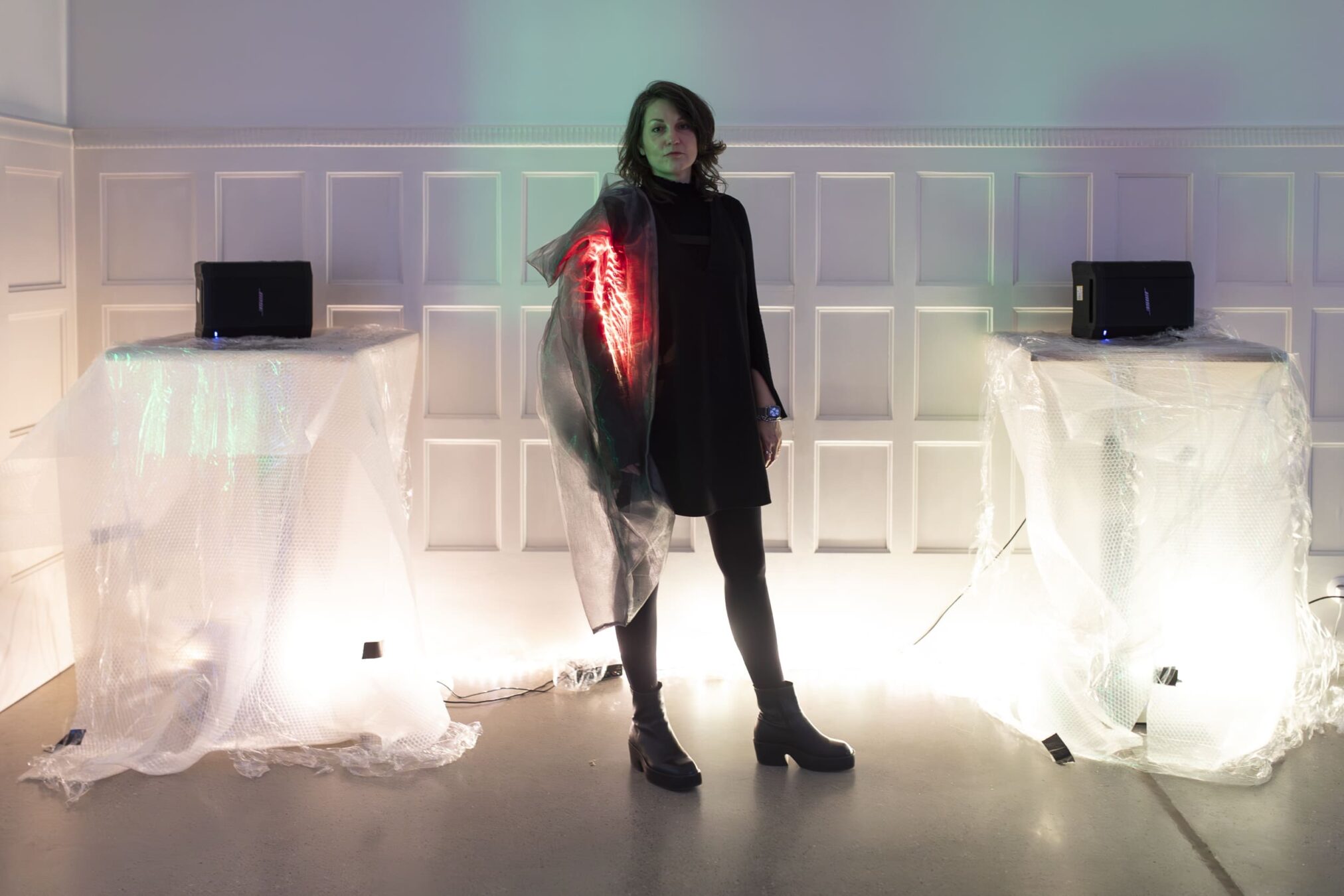
Folding Field explores how physical energy can be translated into a perceptible experience. The project is based on research into nanomembranes, which form the basis of autonomous ‘smartlet’ microrobots – ultra-thin, multi-layered systems that fold into three-dimensional microstructures and integrate electronics, photonics and sensor technology.
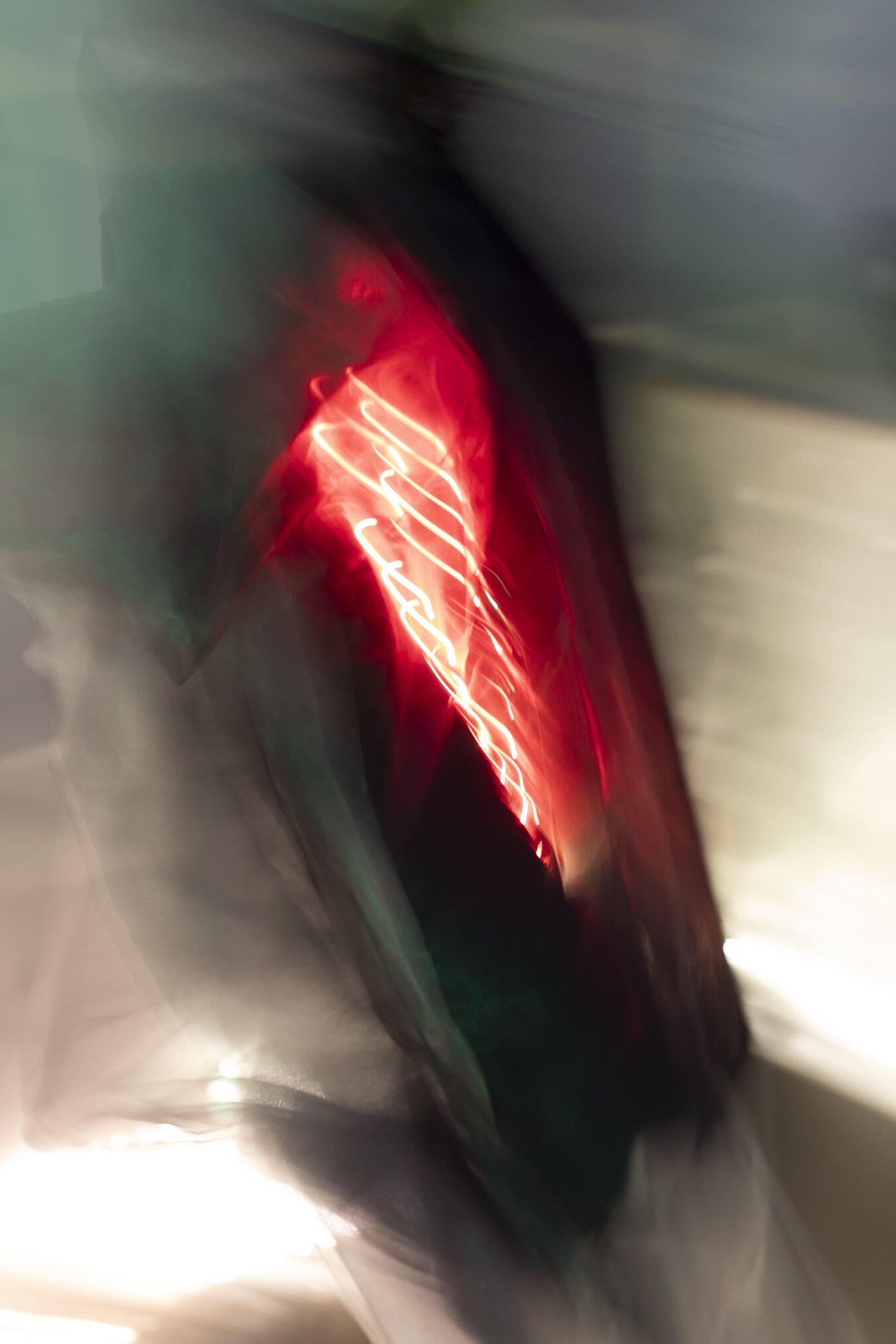
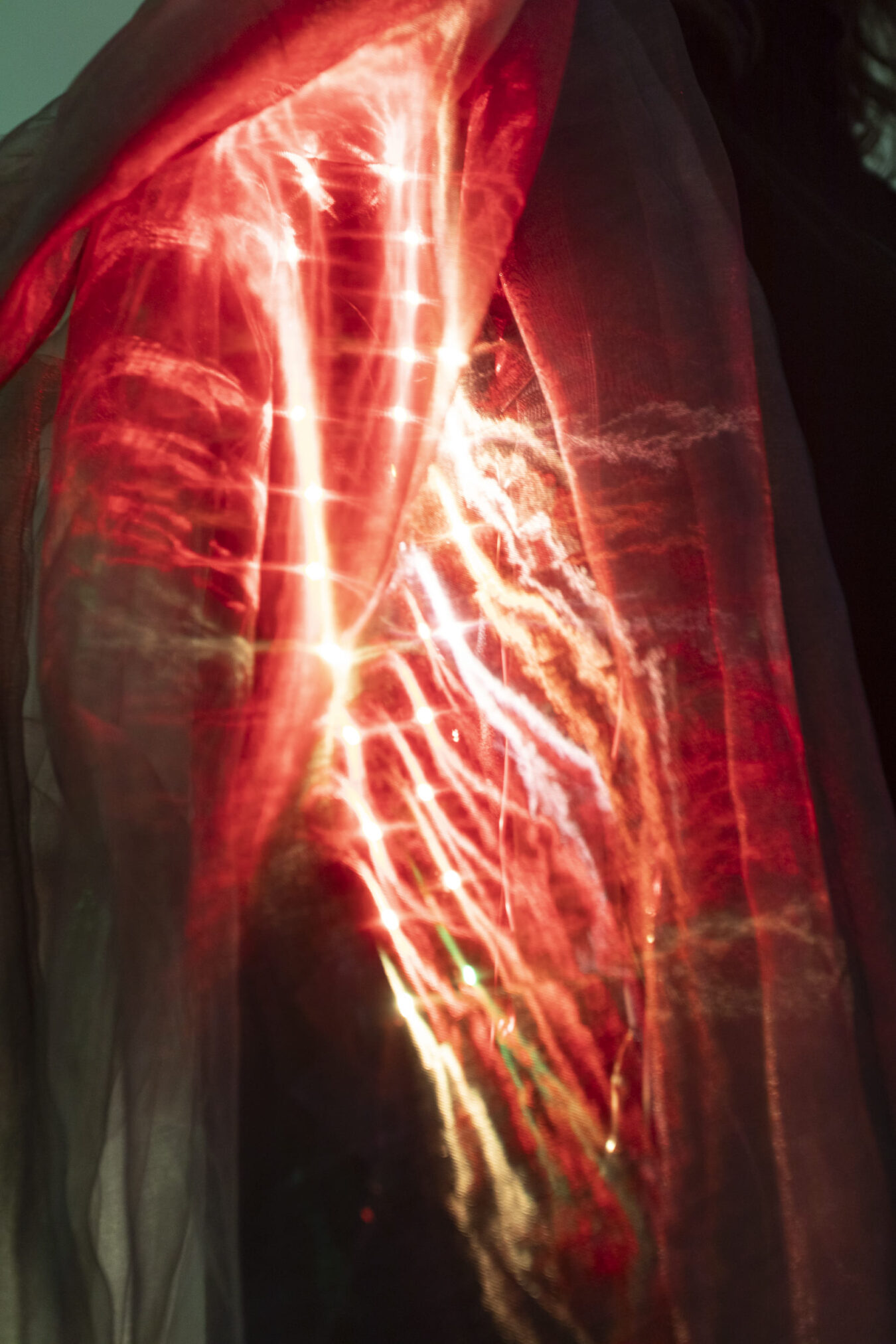
Layers of translucent fabric, interspersed with reactive light, respond to movement and proximity, while sounds – derived from recordings of electromagnetic fields in the MAIN laboratories – expand the work into a sonic dimension. Folding Field positions the body as a sensitive interface in an environment of energetic and informational exchange processes.