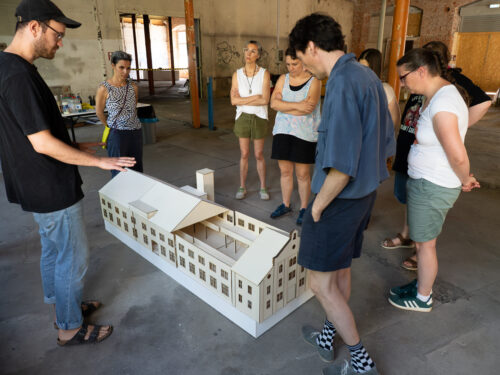
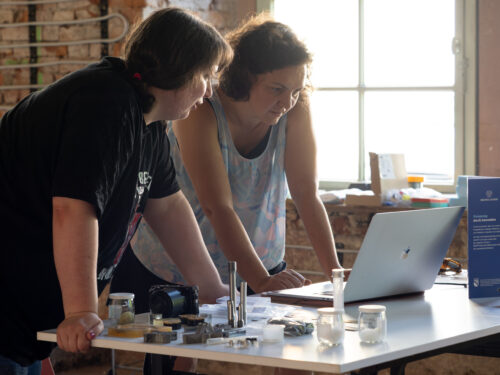
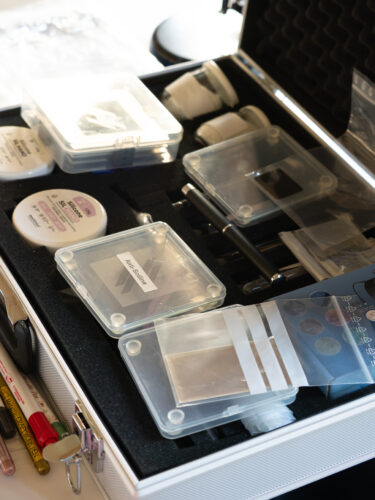
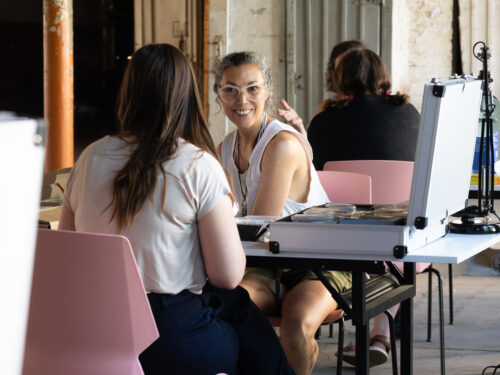
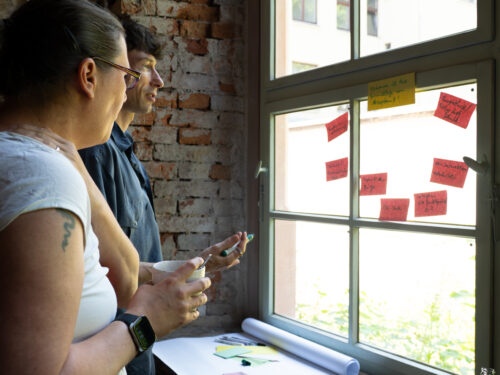
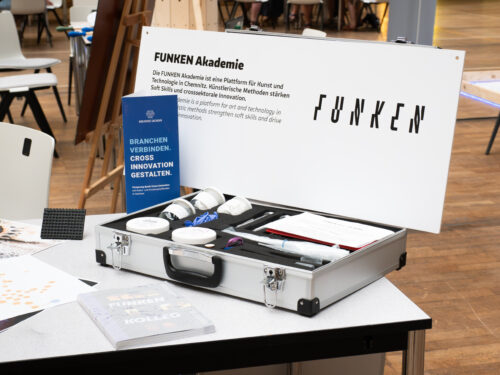
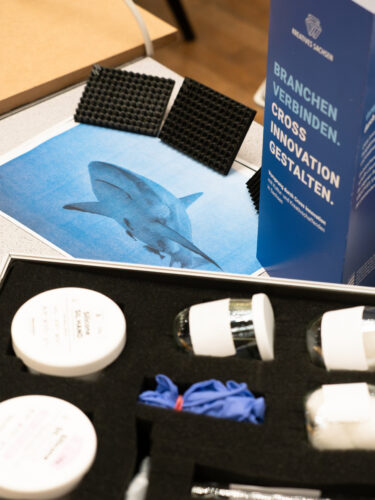
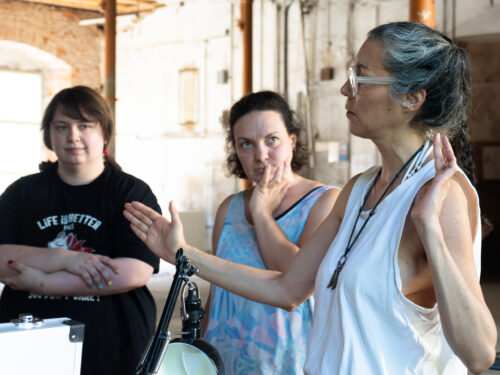
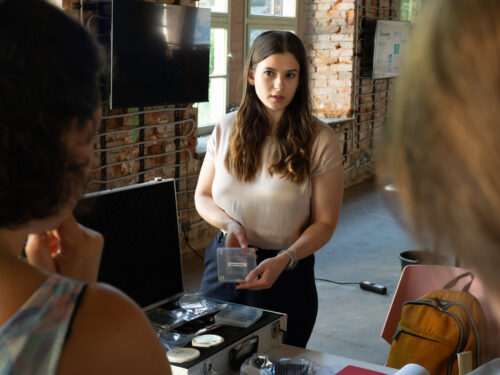
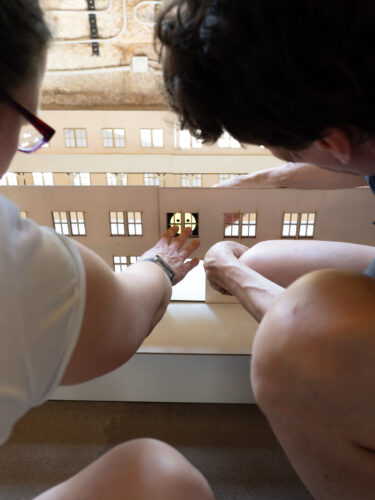
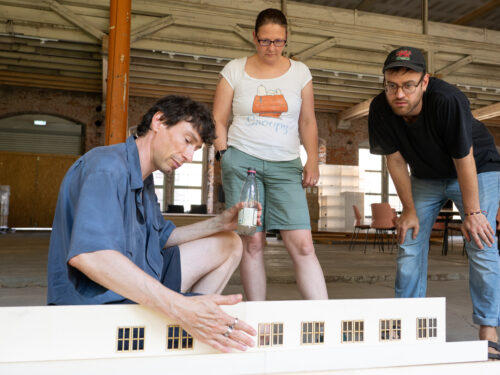
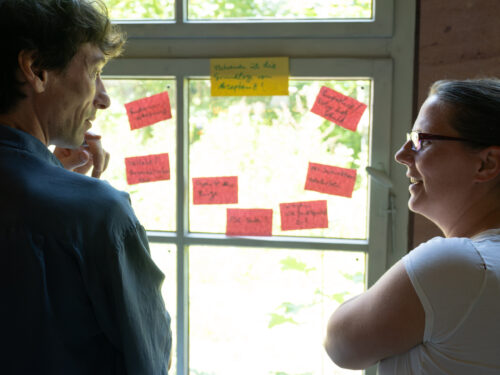
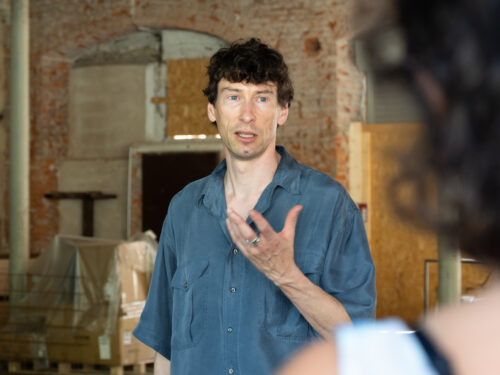
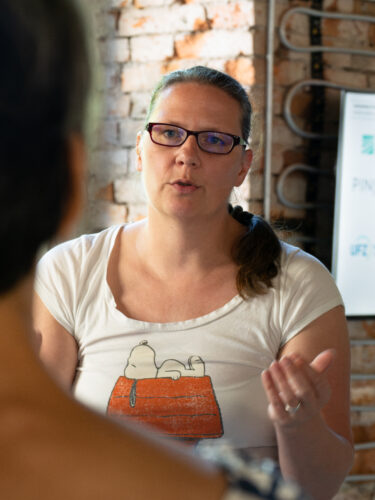
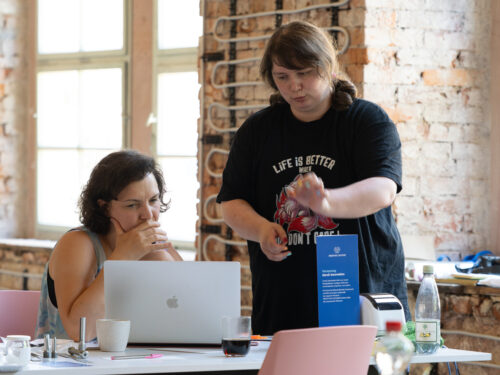
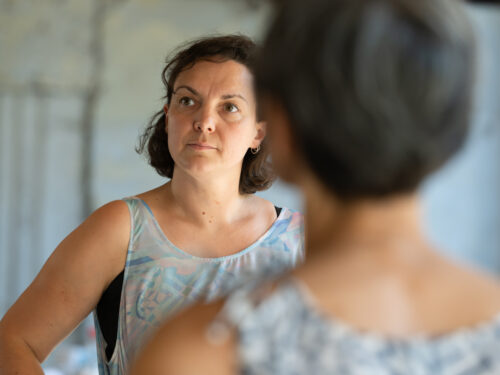
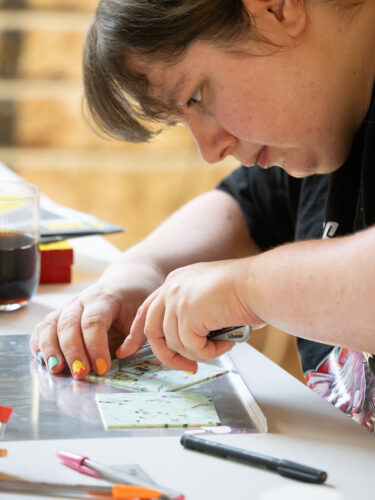
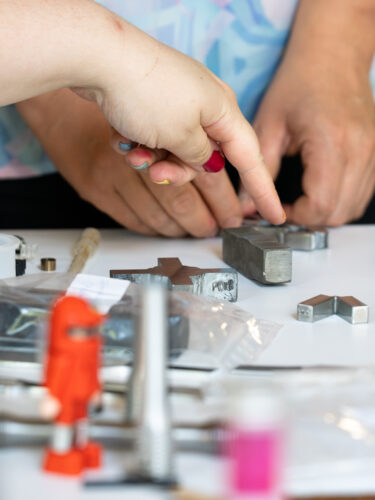
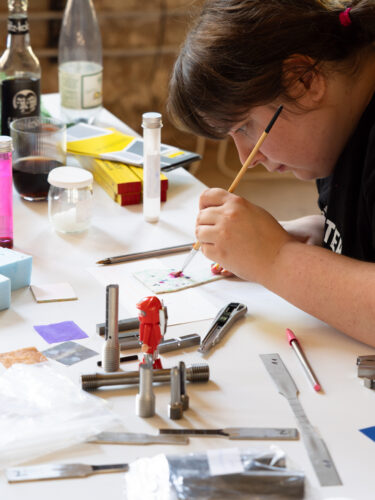
To this end, three artists curated by the FUNKEN Academy and three representatives from business and research formed cross-sectoral tandems. The starting point for the full-day innovation workshop was a set of suitcases which had been filled in advance by the participating companies with materials, tools, images and traces of their everyday working lives. Through joint discussion, the tandems explored each other’s ways of thinking, examined materials and processes, and used these to develop model-based future scenarios.
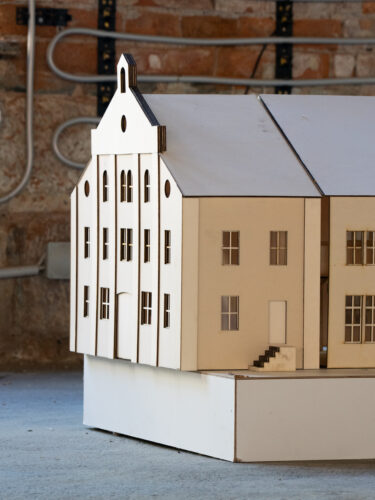
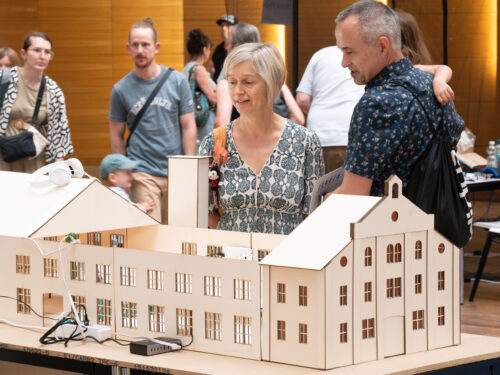
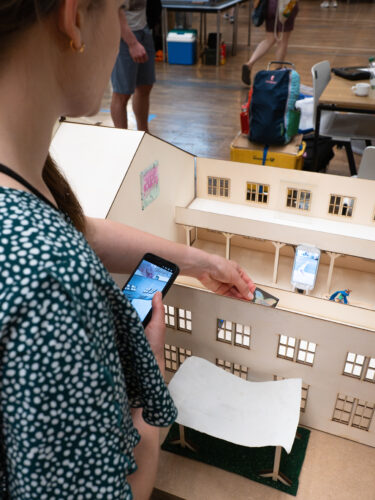
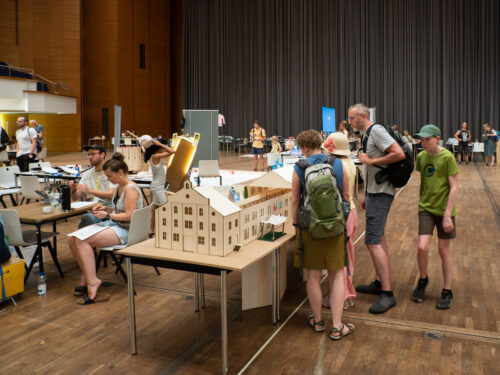
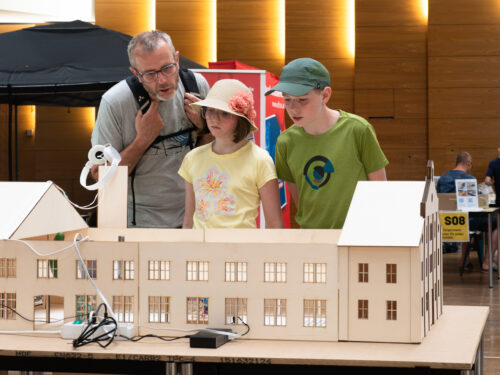
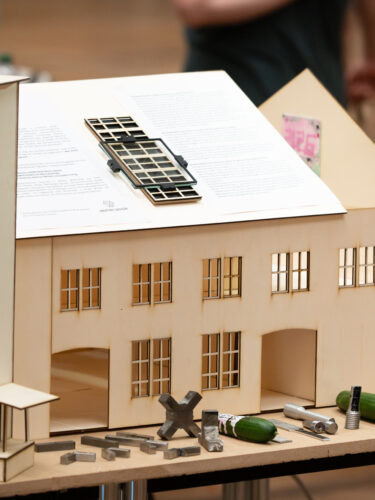
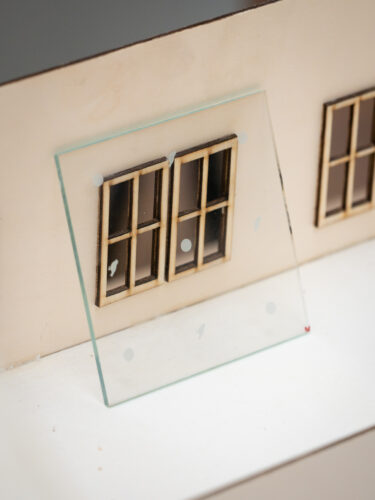
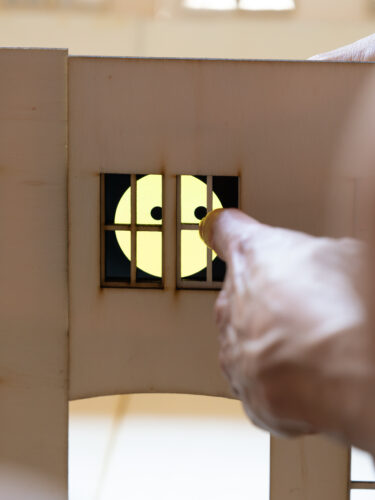
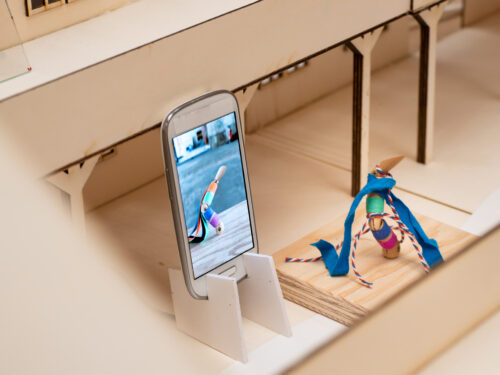
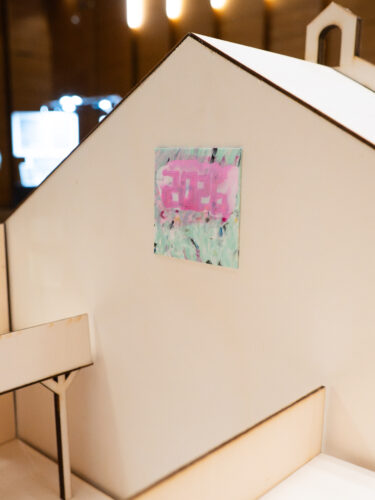
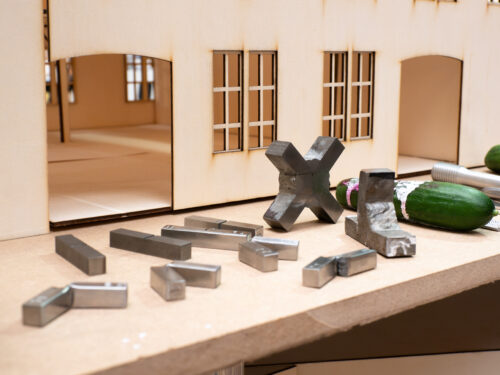
These visions of the future were integrated into a true-to-scale architectural model of the former machine factory at Gießerstraße 5. The model visualised the ‘Museum of Potential Futures’ – an imaginary place that serves as a space for discussion and possibilities for future developments.
The resulting works were presented to the public the following day as part of the FUNKEN Pilot @ Makers United event at the Stadthalle Chemnitz. They did not present finished visions of the future, but rather food for thought – snapshots of an intensive exchange between the arts, science and industry.
The innovation workshop made it clear that cross-innovation is far more than simply working together on an idea. The real added value lay in the dialogue. These encounters revealed that innovation does not arise solely from new technology, but above all where different ways of thinking come together. Artistic questions helped to bring implicit knowledge to the surface. At the same time, technological processes opened up new creative avenues for the artists.
THREE FUTURE NARRATIVES
The following three narratives of the future provide insights into the ideas, thought processes and visions developed by the cross-sectoral tandems:
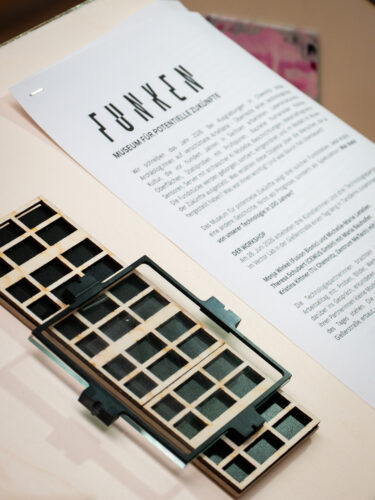
Together with Monja Winkel from Fusion Bionic GmbH, Michelle-Marie Letelier developed a vision of the future centred on bio-inspired surfaces. Using ultra-fast laser technology, Fusion Bionic transfers functions found in nature onto materials – such as water repellency, self-cleaning properties or anti-glare glass surfaces. In the workshop, this technological expertise met Letelier’s perspective on the philosophy of nature. For the Museum of Potential Futures, exhibits were created that translate the company’s portfolio into an architecture of the future: a water-repellent canopy, bird-friendly windows and functionalised solar panels. The focus was on the question of how natural principles might shape building and living in the future.
“In our day-to-day work, we deal with very specific problems. Here, we were able to think on a larger scale, dream more and view innovation from a completely different perspective.” “In our day-to-day work, we deal with very specific technical applications. Here, we were able to place our expertise within a broader context and view innovation from a completely different perspective.” Monja Winkel
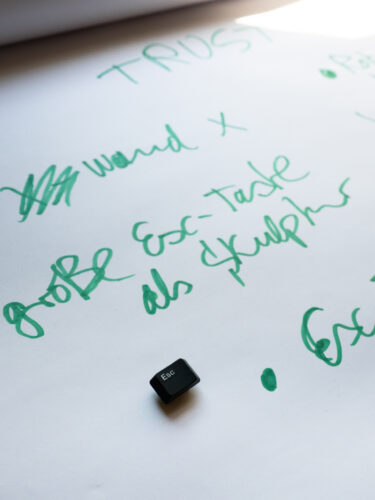
Stefan Hurtig and Dr Kristina Kittner from the MeTech Centre at Chemnitz University of Technology explored the question of how humans and intelligent machines might coexist in a hundred years’ time. Discussions on robotics, artificial intelligence and emotions gave rise to a scenography centred on trust, personalisation and control. Playful elements, emotional interfaces and customised robots became symbols of a future relationship between humans and machines.
“At the start, I mainly tried to understand how you work. Only then could we think together about how to visualise these ideas.” Stefan Hurtig
“We need to learn to explain our work to people who have a completely different perspective on it.” Dr Kristina Kittner
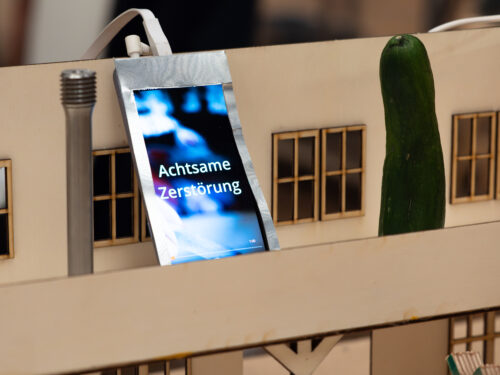
Theresa Schubert from Cewus GmbH worked alongside Maria Bauhofer to explore the question of what significance materials testing will still hold in a hundred years’ time. This collaboration gave rise to an installation on ‘mindful destruction’: test specimens are examined, destroyed and ultimately reduced to figures. The model brings to light what often remains invisible in everyday life – and how day-to-day work not only imparts knowledge about individual materials, but also a keen sense of changes in material qualities and international supply chains.
“I was impressed by just how much knowledge is embedded in this day-to-day work. This knowledge isn’t just stored in data – it’s in the hands and in the eye for the material.” Maria Bauhofer
“The fact that other people find what I do fascinating – it’s not something you even think about in everyday life.” Theresa Schubert | CEWUS GmbH
“We need to learn to explain our work to people who have a completely different perspective on it.” Dr Kristina Kittner
Photos: Michele Scognamillo